


Introduction
A B2B SaaS CMO we spoke to recently said something that stuck with us. Her team had spent six months publishing content, fixing technical SEO, and building backlinks. Rankings improved. Traffic crept up. But when she typed their core category keyword into ChatGPT, a competitor showed up. Then another. Her brand wasn't mentioned once.
What they were missing is an AEO strategy framework: a structured, repeatable system that gets your brand cited in AI-generated answers across Google AI Overviews, ChatGPT, Perplexity, and DeepSeek.
It covers keyword discovery, content structure, technical setup, authority building, and citation measurement, all working together so your content becomes the source AI engines trust and extract.
According to Brightedge, 68% of all online experiences begin with a search engine and a growing share now end with an AI-generated answer, not a click.
Want to see where your content stands today?
Book a free AEO audit with Revv Growth
In this blog, we’ll discuss the AEO strategy framework behind that shift, along with the real use cases and results we’re seeing every week.
The RevvGrowth AEO Strategy Framework: Our 8-Step Process (Tried & Tested!)
We didn't build this framework in theory. RevvGrowth started with zero AI Overview citations and no LLM references for any of our target keywords.
Eight months later, we were cited in Google AI Overviews, ChatGPT, Perplexity, and DeepSeek for queries like "best B2B SaaS SEO agency," "best AEO agencies of the USA."
Here is the exact system we use for our own brand and for every client engagement.
Step 1 — AEO Discovery: Finding Winnable Queries
The most important decision in any AEO campaign is which keywords to pursue. Unlike traditional SEO, you can't build toward a keyword over time. AEO requires targeting queries where Google has already decided an AI Overview is warranted — you're not competing for a blue link, you're competing to be the source AI systems pull from.
That's why discovery comes first. Here's how we run it:
Phase 1: We start by exporting every query from Google Search Console where the client already has impressions. These are the easiest starting points because topical authority already exists, and that makes citation far more likely.
Inside that export, we filter for AEO-eligible intent categories:
- Informational: 'what is', 'how does', 'definition of', 'guide to'
- Comparison: 'vs', 'best', 'top', 'alternatives', 'compared to'
- Commercial investigation: 'best [service] for [use case]', 'top [software] 2025'
- How-to: 'how to', 'step-by-step', 'ways to'
Phase 2: Once we have a candidate list, we manually confirm AI Overview presence for every keyword in incognito. This matters because tools have a significant lag — some SaaS AEO platforms report citations that disappeared weeks ago. Manual checks take under two minutes per keyword and are always accurate.
Phase 3: We score every confirmed keyword across four dimensions: Traffic Potential, Intent Match, Current Ranking, and AI Overview Present (Y/N). A keyword that scores well on all four is a near-certain quick win.
Phase 4: Everything goes into the AEO Opportunity Tracker — a shared document that drives content sequencing, outreach targeting, and weekly reporting for the entire engagement. The tracker is updated weekly as rankings shift, then shared with the client so there's never a question about what's next.
Step 2 — SEO Foundation: Pillar-Cluster Architecture and E-E-A-T
Discovery tells you what to write. But before you write anything, the site itself needs to be citable. AI engines don't cite random websites — they cite sources they trust, and that trust is built before a single piece of content is published.
We start with architecture. Every site we work with is mapped onto a pillar-cluster model. Pillar pages define the core topic territories the brand wants to own. Cluster pages go deep on individual subtopics and link back. We define 3–5 pillar pages and 8–15 cluster pages per pillar. For example, for one of our clients, Everstage, the pillar was sales compensation, with clusters covering enterprise sales effectiveness, commission compliance, and more.
Architecture alone doesn't make a site citable, though. That's where E-E-A-T signals come in — and we build them as infrastructure, not as content afterthoughts:
- Dedicated author pages with credentials linked from every published piece
- Published case studies with specific, verified metrics
- Organisation schema on homepage and About page
- First-party data and original frameworks embedded in content
- Three outbound links per blog to Gartner, McKinsey, Forrester, or G2
These aren't optional. They're the signals that determine whether an AI engine considers your site citable in the first place.
Step 3 — Content Intelligence: Brief Creation and the Short Answer Block
With the site set up to be trusted, the next question is: how does every piece of content earn its citation? The answer starts at the brief stage.
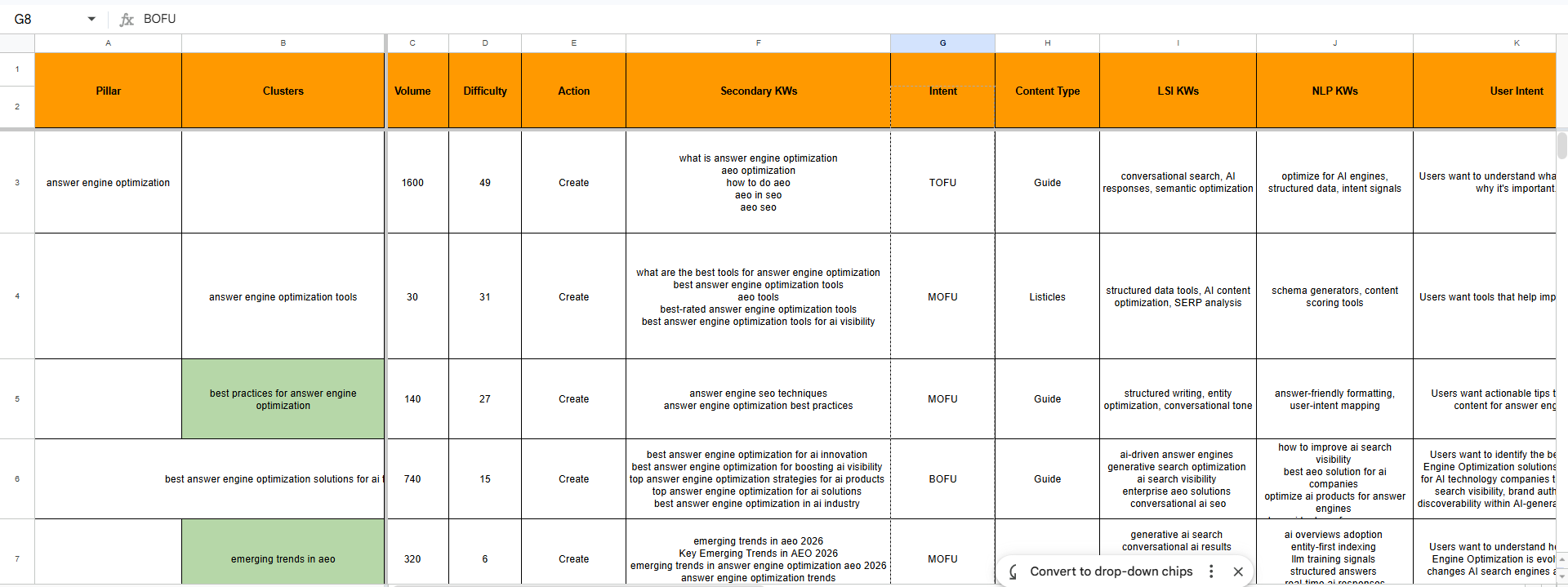
Writing doesn't start until a complete 14-field brief is signed off. Every brief covers the primary keyword, URL slug, secondary and LSI keywords, SERP and AI Overview analysis, intent mapping, word count target, FAQ questions, schema requirements, internal and external link targets, CTA placement, and llm.txt guidance. Nothing is left for the writer to guess at.
Before the brief is finalized, we run a semantic analysis on the primary keyword to pull out the exact nouns, verbs, entities, and related queries that AI engines associate with that topic. That output feeds directly into the heading structure, FAQ questions, and secondary keyword list — so the page is built around what AI systems are actually looking for, not what a keyword tool thinks is relevant.
Screenshot: Keyword brief creation inside Revv Growth's workflow
Structuring content for extraction is the core of AEO, which we've broken down in how to do AEO optimization, particularly around building short answer blocks. For one recent AEO content cluster, the brief did the heavy lifting: it aligned every page with the right funnel stage and content type before a single word was written.
Step 4 — Content Production: The 8-Step AI + Human Workflow
Briefs get handed to production. This is where most agencies struggle because they either lean too hard on AI (output reads generic, gets ignored by LLMs) or refuse to use it at all (timelines blow out, volume never compounds). Our production model is hybrid: 55% AI-assisted, 45% human editorial.
We've built custom GPTs that automate the repeatable tasks like outline creation. Human editors bring factual accuracy, strategic depth, brand voice, and the judgment that separates good content from citable content. This is the workflow we built and refined for Everstage, which produced 40+ long-form blogs in two months.
Every piece ships with AI-extractable elements that AI engines look for when deciding what to cite:
- Original statistics with source attribution
- Named, proprietary frameworks
- Feature-by-feature comparison tables
- Numbered step-by-step processes
- "Best for" decision selectors
For teams looking to systematize this at scale, AirOps is worth exploring. It connects AEO citation tracking directly to content production workflows — so instead of manually translating visibility gaps into briefs, the system does it for you. You can see which prompts you're missing from AI search results, identify which URLs competitors are getting cited on, and feed that directly into a content or outreach workflow. It's the operational layer between "we know where we're not showing up" and "here's what we're publishing next to fix it.
Step 5 — Technical Readiness: Schema, llm.txt, and Crawl Access
Good content on a technically broken site won't get cited. Period. That's why schema, crawlability, and site performance are audited and resolved before any content goes live — not after.
A few technical elements directly impact AI Overview visibility: clean semantic HTML, fast Core Web Vitals (AI engines deprioritize slow-loading pages when scraping), valid schema that matches the content type, and an llm.txt file that explicitly guides AI crawlers on what to index and how your brand should be cited.
Our schema priority stack:
A missing piece of schema won't tank a page, but a stack of them working together dramatically improves the odds of citation.
Step 6 — Authority Building: Backlinks and Off-Site Citations
On-page optimization earns a seat at the table. Off-page authority determines who wins the citation.
We build links through five channels: guest posts on topically relevant publications, curated roundup placements, niche directories (G2, Capterra, Clutch, Product Hunt), competitor comparison pages, and niche edits on live authoritative articles. Every link must come from a domain with DR 50+ and sit in the article body — never sidebars or footers.
But backlinks alone aren't the whole picture for AEO. We also build presence on every platform LLMs actively scrape: Crunchbase, G2, Clutch, LinkedIn, Medium, and Substack. Third-party reviews on G2 and Capterra function as freshness and credibility signals for AI engines. Inclusion in industry reports carries disproportionate citation weight — often more than a backlink from a DR 70 blog.
Step 7 — Measurement: KPIs, Citation Quality Scale, and Recovery Protocol
By this point, content is live, authority is building, and citations should start appearing. But AEO performance can't be measured by traffic alone — that's the old playbook. Here's how we actually track it.
We measure across three layers:
- Layer 1 — Content & Technical: Clearscope scores, schema validation, Core Web Vitals, publishing cadence
- Layer 2 — AI Visibility: Manual incognito checks every week for Google AI Overview, ChatGPT, and Perplexity citations across the top 20 target keywords
- Layer 3 — Business Impact: Organic traffic growth, estimated traffic value, leads from AI-cited pages, sales call mentions of AI discovery
Not every citation is equal, either. We classify each one into a four-level quality scale: Level 4 is an indirect reference in the citations panel, Level 1 is a named source with direct attribution ("According to RevvGrowth..."). The goal is to move up the scale over time — not just get cited, but get cited as the primary authority.
And when a citation is lost, we don't wait. We run a 5-step recovery protocol within 48 hours: compare the Short Answer Block against the current citation source, rewrite and strengthen it, build 1–2 new contextual backlinks, re-validate schema, and check Core Web Vitals. A slow LCP reduces crawl frequency and citation probability — which is why speed stays on the radar even after launch.
Step 8 — Milestone Timeline: What to Expect and When
Last question — and the one every client asks on the kickoff call: how long does this actually take?
AEO results compound. The first AI Overview win typically comes within 6–10 weeks for clients with existing topical authority. The full compounding effect — multiple pages cited regularly across AI platforms — is usually established within 4–6 months. Clients starting from a weaker authority baseline can expect to push the first timeline out by 4–6 weeks, but the compounding curve looks the same once it starts.
The key is that AEO isn't linear. Once a few pages start getting cited, the site's entity signals strengthen across the board, making subsequent citations easier to earn. The first win is the hardest. Everything after it compounds.
RevvGrowth Results: Atlan and Everstage
The 8-step framework above isn't theoretical. We've run it across our own site and client engagements, and the numbers below show what happens when it's executed end-to-end. Here's what it looked like for Atlan and Everstage.
Atlan
Atlan is a fast-growing data collaboration platform. Their goal was to establish Atlan as the definitive citation source for data governance and data catalog queries in AI engines, without any paid media spend.
Using the full 8-step framework, we published
- 130+ SEO-optimized blogs per month
- won multiple Google Featured Snippets
- earned citations across 4+ AI platforms.
For the query "data catalog vs data lineage," Atlan's content was cited as the primary source in Google AI Overview.

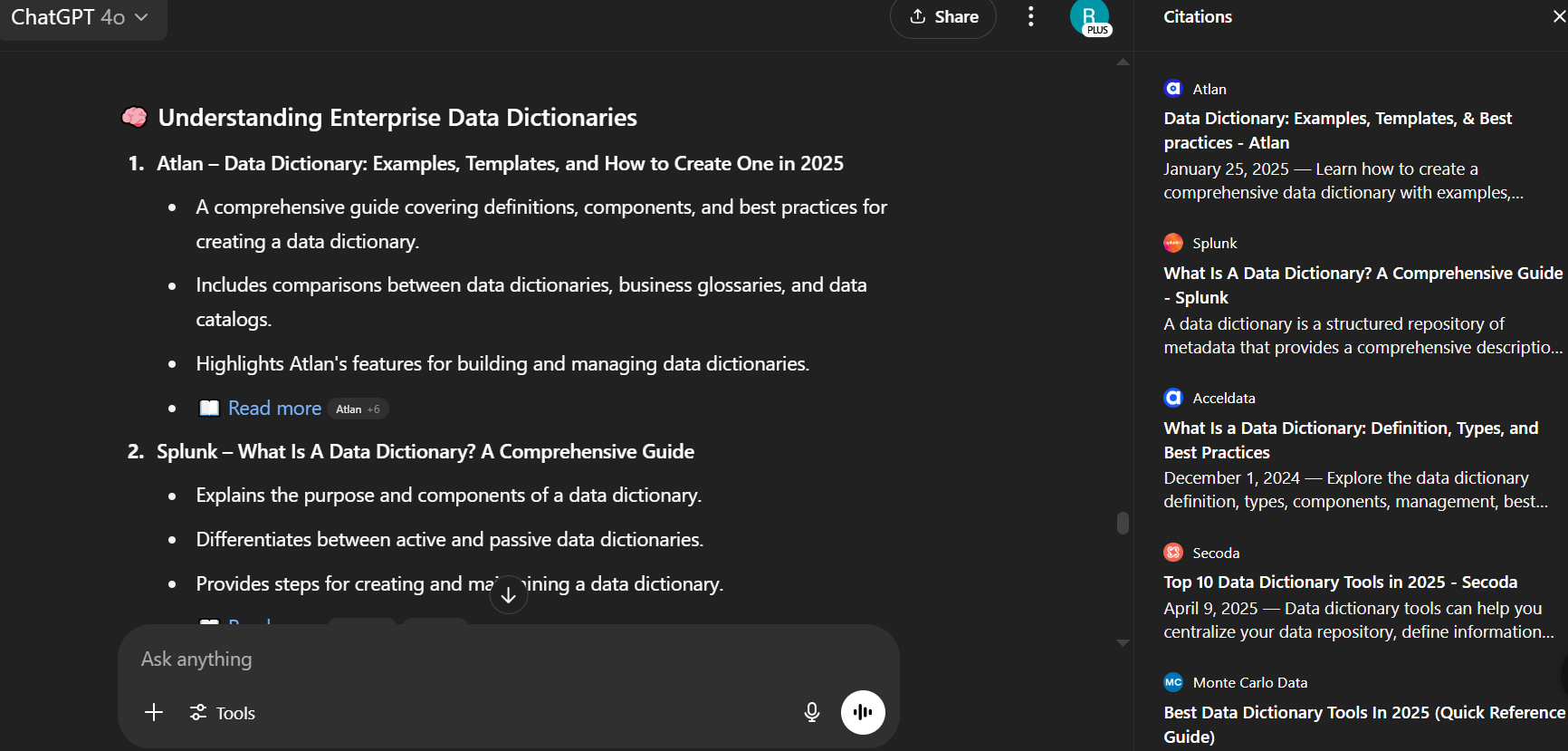
For "enterprise data dictionaries," Atlan ranked #1 in ChatGPT 4o's citations panel.
Everstage
Everstage is a global sales compensation and commission tracking platform.
Their goal was to capture high-intent traffic for competitive sales compensation keywords and scale content rapidly without sacrificing quality.
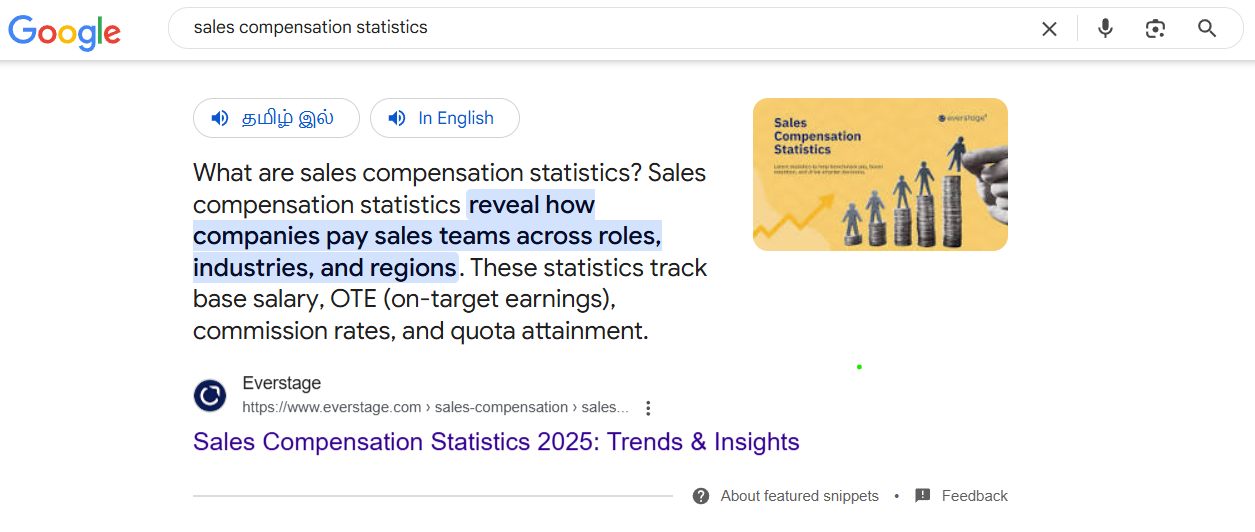
We delivered 40+ long-form published blogs in under two months. Everstage now holds Page 1 Google rankings for key queries, is cited across 3+ AI platforms, and owns featured snippet positions for "sales compensation statistics" and "the future of sales compensation."
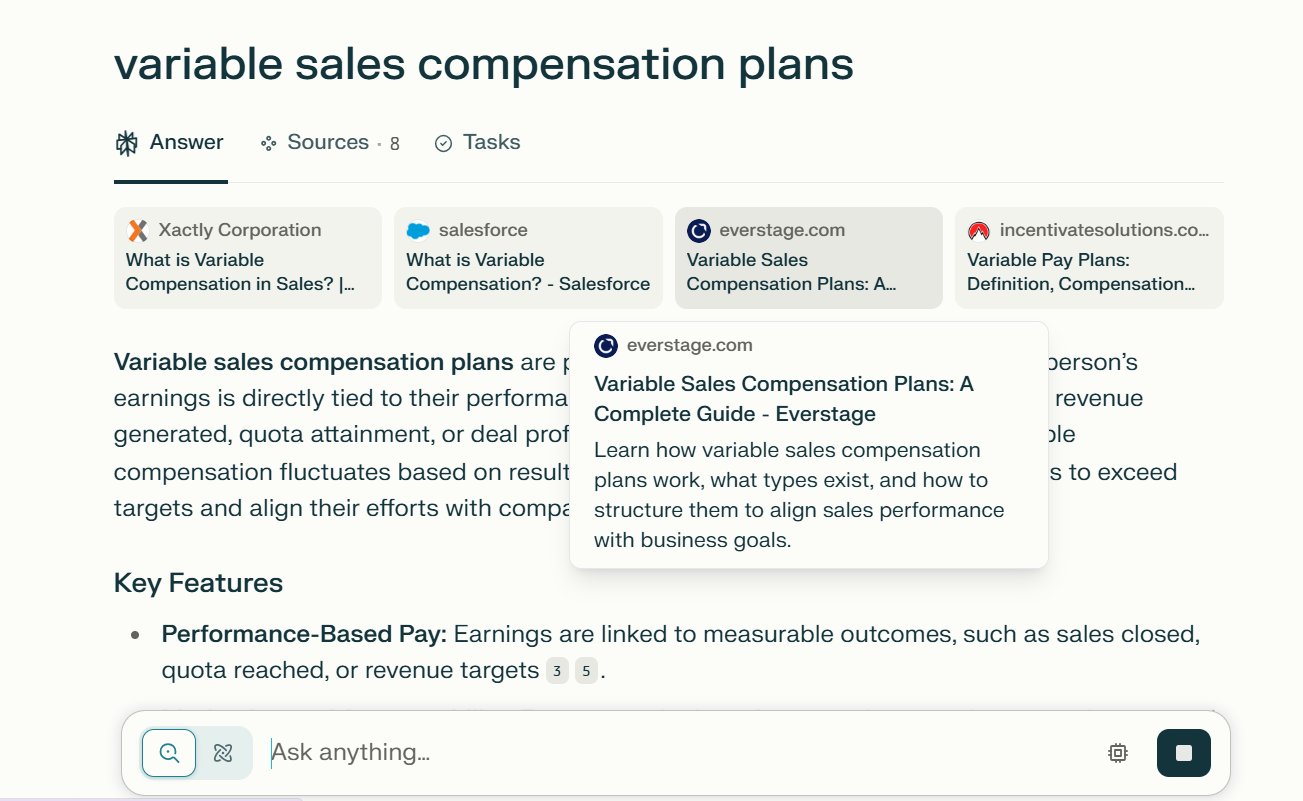
For "variable sales compensation plans," Everstage appeared as the top cited source in Perplexity.
For "sales compensation consultants," Everstage was cited in ChatGPT 4o's citations panel.
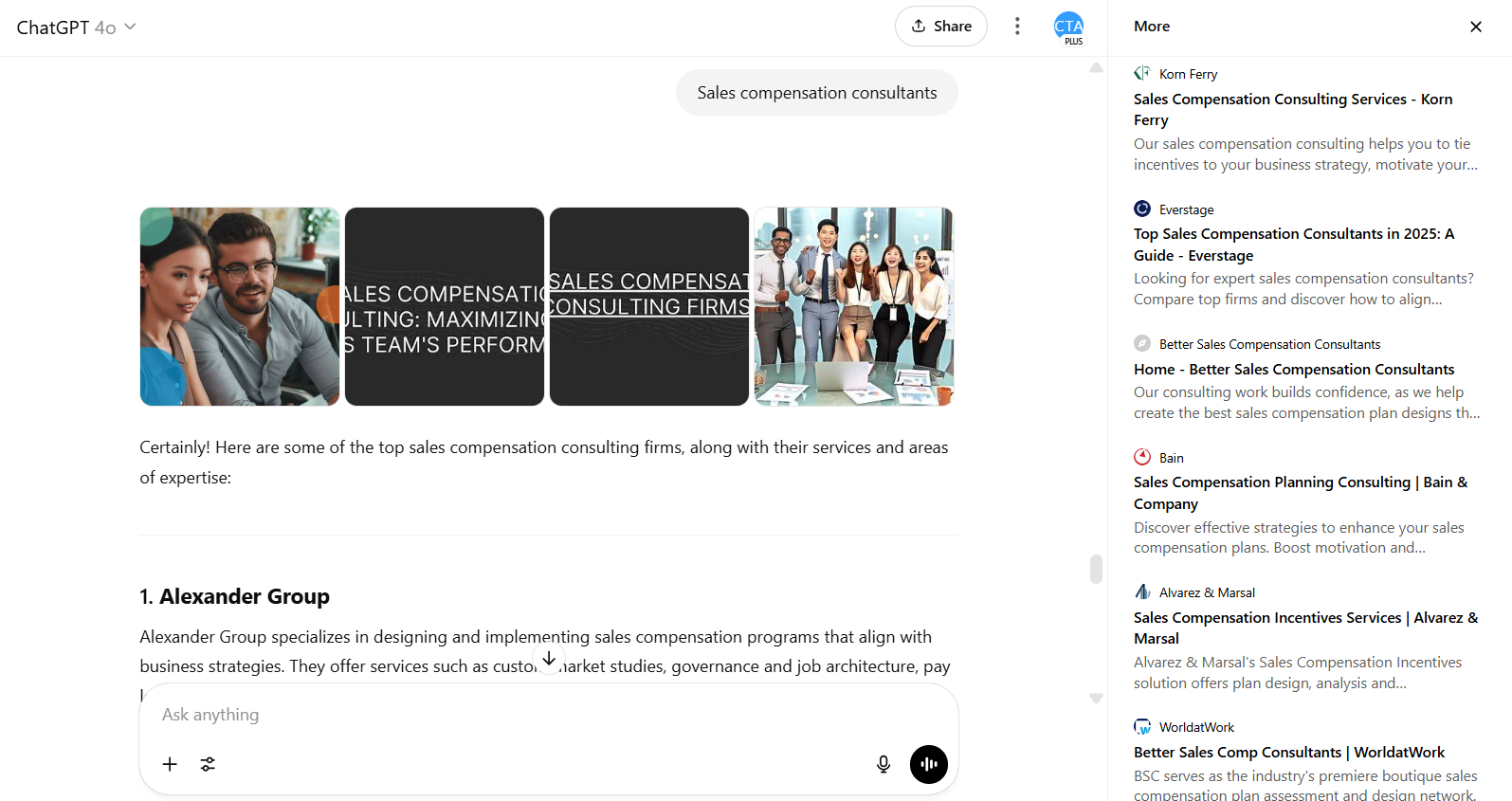
These are not projections. They are screenshots from live AI engines, the same results your buyers are seeing when they research your category right now.
You can see our detailed breakdown of the Everstage AEO case study here.
Common AEO Mistakes B2B SaaS Companies Make
Most B2B SaaS teams approach AEO by adding FAQ sections to existing blogs and calling it done. That's not a strategy, it's a checkbox. Here's what actually kills AEO performance:
- Writing for keywords, not for extraction. If your content doesn't have a declarative Short Answer Block in the first 100 words, AI engines have no clean extraction point. They move to the next source.
- Ignoring technical readiness. Missing schema, blocked AI crawlers in robots.txt, slow Core Web Vitals. Any one of these will prevent citation regardless of content quality. Most teams don't audit these before publishing.
- Targeting queries without AI Overviews. If Google hasn't triggered an AI Overview for a keyword, there's no citation to win yet. AEO requires confirming the AI Overview presence manually before investing in content.
- Building backlinks without entity alignment. A generic DR 70 link from an unrelated domain does less for AEO than a niche-relevant DR 55 link from a topically aligned source. Entity alignment is the strongest topical authority signal in the current algorithm.
- No llm.txt file. Most SaaS sites have never configured one. Without it, AI crawlers have no explicit guidance on how to represent your brand and default to whatever they find, which may not be accurate or favorable.
- Measuring only traffic. If you're not manually checking your target keywords in ChatGPT and Perplexity weekly, you have no idea whether your AEO efforts are working. Traffic is a lagging indicator. Citation status is the leading one.
Key Takeaways
Now that we’ve walked through the full AEO framework, here’s a quick recap.
- Google AI Overviews now appear for nearly half of all search queries. B2B SaaS brands not optimizing for AEO are losing the pipeline they never see.
- AEO and SEO share a foundation, but require fundamentally different optimization logic: ranking vs. citation are different goals.
- Technical readiness (schema, llm.txt, crawl access) is a prerequisite for citation, not an afterthought.
- RevvGrowth went from zero AI citations to being featured across Google AI Overviews, ChatGPT, Perplexity, and DeepSeek in 8 months using this exact framework.
- AEO results compound. First citations typically come within 6–10 weeks. The full compounding effect takes 4–6 months.
If your content isn't built to be extracted by AI engines, your competitors' content is. Book a free AEO strategy call with RevvGrowth, and we'll show you exactly where your current content is leaving citations on the table.
FAQs
Step 6 — Authority Building: Backlinks and Off-Site Citations
On-page optimization earns a seat at the table. Off-page authority determines who wins the citation.
We build links through five channels: guest posts on topically relevant publications, curated roundup placements, niche directories (G2, Capterra, Clutch, Product Hunt), competitor comparison pages, and niche edits on live authoritative articles. Every link must come from a domain with DR 50+, placed in the article body — never sidebars or footers.
Beyond backlinks, we build presence on every platform LLMs actively scrape: Crunchbase, G2, Clutch, LinkedIn, Medium, and Substack. Third-party reviews on G2 and Capterra function as freshness and credibility signals for AI engines. Inclusion in industry reports carries disproportionate citation weight.
Step 7 — Measurement: KPIs, Citation Quality Scale, and Recovery Protocol
AEO performance cannot be measured by traffic alone. We track three layers:
- Layer 1 — Content & Technical: Clearscope scores, schema validation, Core Web Vitals, publishing cadence
- Layer 2 — AI Visibility: Manual incognito checks weekly for Google AI Overview, ChatGPT, and Perplexity citations on top 20 target keywords
- Layer 3 — Business Impact: Organic traffic growth, estimated traffic value, leads from AI-cited pages, sales call mentions of AI discovery
We classify every citation into one of four quality levels, from Level 4 (indirect reference in citations panel) to Level 1 (named source with direct attribution: "According to RevvGrowth..."). The goal is to move up the scale over time.
When a citation is lost, we run a 5-step recovery protocol within 48 hours: compare the Short Answer Block against the current citation source, rewrite and strengthen it, build 1–2 new contextual backlinks, re-validate schema, and check Core Web Vitals. A slow LCP reduces crawl frequency and citation probability.
Step 8 — Milestone Timeline: What to Expect and When
AEO results compound. The first AI Overview win typically comes within 6–10 weeks for clients with existing topical authority. The full compounding effect, multiple pages cited regularly across AI platforms, is usually established within 4–6 months.
RevvGrowth Results: Atlan and Everstage
Atlan is a fast-growing data collaboration platform. Their goal was to establish Atlan as the definitive citation source for data governance and data catalog queries in AI engines, without any paid media spend.
Using the full 8-step framework, we published
- 130+ SEO-optimized blogs per month
- won multiple Google Featured Snippets
- earned citations across 4+ AI platforms.
For the query "data catalog vs data lineage," Atlan's content was cited as the primary source in Google AI Overview.
For "enterprise data dictionaries," Atlan ranked #1 in ChatGPT 4o's citations panel.
Everstage is a global sales compensation and commission tracking platform.
Their goal was to capture high-intent traffic for competitive sales compensation keywords and scale content rapidly without sacrificing quality.
We delivered 40+ long-form published blogs in under two months. Everstage now holds Page 1 Google rankings for key queries, is cited across 3+ AI platforms, and owns featured snippet positions for "sales compensation statistics" and "the future of sales compensation."
For "variable sales compensation plans," Everstage appeared as the top cited source in Perplexity.
For "sales compensation consultants," Everstage was cited in ChatGPT 4o's citations panel.
These are not projections. They are screenshots from live AI engines, the same results your buyers are seeing when they research your category right now.
You can see our detailed breakdown of the Everstage AEO case study here.
Common AEO Mistakes B2B SaaS Companies Make
Most B2B SaaS teams approach AEO by adding FAQ sections to existing blogs and calling it done. That's not a strategy, it's a checkbox. Here's what actually kills AEO performance:
- Writing for keywords, not for extraction. If your content doesn't have a declarative Short Answer Block in the first 100 words, AI engines have no clean extraction point. They move to the next source.
- Ignoring technical readiness. Missing schema, blocked AI crawlers in robots.txt, slow Core Web Vitals. Any one of these will prevent citation regardless of content quality. Most teams don't audit these before publishing.
- Targeting queries without AI Overviews. If Google hasn't triggered an AI Overview for a keyword, there's no citation to win yet. AEO requires confirming the AI Overview presence manually before investing in content.
- Building backlinks without entity alignment. A generic DR 70 link from an unrelated domain does less for AEO than a niche-relevant DR 55 link from a topically aligned source. Entity alignment is the strongest topical authority signal in the current algorithm.
- No llm.txt file. Most SaaS sites have never configured one. Without it, AI crawlers have no explicit guidance on how to represent your brand and default to whatever they find, which may not be accurate or favorable.
- Measuring only traffic. If you're not manually checking your target keywords in ChatGPT and Perplexity weekly, you have no idea whether your AEO efforts are working. Traffic is a lagging indicator. Citation status is the leading one.
Key Takeaways
Now that we’ve walked through the full AEO framework, here’s a quick recap.
- Google AI Overviews now appear for nearly half of all search queries. B2B SaaS brands not optimizing for AEO are losing the pipeline they never see.
- AEO and SEO share a foundation, but require fundamentally different optimization logic: ranking vs. citation are different goals.
- Technical readiness (schema, llm.txt, crawl access) is a prerequisite for citation, not an afterthought.
- RevvGrowth went from zero AI citations to being featured across Google AI Overviews, ChatGPT, Perplexity, and DeepSeek in 8 months using this exact framework.
- AEO results compound. First citations typically come within 6–10 weeks. The full compounding effect takes 4–6 months.
If your content isn't built to be extracted by AI engines, your competitors' content is. Book a free AEO strategy call with RevvGrowth, and we'll show you exactly where your current content is leaving citations on the table.
.svg)


.webp)
.avif)