


If your SEO program is struggling to win visibility for high-value searches through your own website, parasite SEO can give you another route to reach relevant buyers through established third-party publishers.
The opportunity is attractive, but the tradeoff matters. You may gain access to an existing audience while giving up some control over the content, distribution, and long-term visibility.
This guide will help you evaluate whether parasite SEO is worth investing in, which platforms make sense, what risks to assess, and how AI can support research and content production without treating visibility as a guaranteed business outcome.
What is parasite SEO and how does it work?
Parasite SEO is a strategy where you publish content on an established third-party website so the hosted page can compete for a target search query. Instead of depending only on your own domain’s authority and search history, you use a publisher that already has visibility, relevant topical coverage, and an established audience.
Here’s how it works:
1. A target query shapes the content: The process begins with a search term relevant to the company’s buyers. Keyword research helps establish what those buyers are looking for and whether the opportunity is aimed at visibility, referral traffic, or inquiries.
2. A third-party site hosts the page: The content appears on a publication, contributor platform, or community with an audience interested in the topic.
3. The host controls publication: The route varies by site. A contributor may publish directly, submit a pitch, or go through editorial review.
4. The hosted page answers the search query: Its content needs to match search intent and meet the publisher’s editorial and linking requirements.
5. The page competes for visibility: The host’s topical coverage, internal links, and promotion may help people and search engines discover it. Ranking is not guaranteed.
6. Readers may reach the company: If the page attracts relevant visitors, some may follow a link to the company’s website or submit an inquiry. Those outcomes are measured separately from the hosted page’s search visibility.
For example, a B2B SaaS company could publish a comparison article on a relevant industry publication. If the article ranks, the publisher’s page receives the search traffic, and interested readers may click through to the SaaS company.
In this setup, the publisher’s website, the article it hosts, and your own website each play a different role:
The key distinction is that parasite SEO is designed to rank the third-party page first. That placement does not automatically improve your own website’s rankings.
What are the benefits and risks of parasite SEO?
Parasite SEO can help you reach searchers through a publisher that already has an audience and search presence. The tradeoff is control: the page may rank on someone else’s domain, but you may have limited say over edits, links, reporting, or how long the content stays live.
Here’s how the main benefits compare with the risks you take on:
The 2025 6sense B2B Buyer Experience Report found that buyers ultimately purchased from a vendor on their Day One shortlist 95% of the time. For third-party publishing, that makes early visibility useful only when the platform actually reaches buyers who could consider your brand.
Before investing, assess how much value the placement can create relative to how much control you are giving up:
- If the publication reaches relevant buyers: Check whether its audience matches your ideal customer profile closely enough to justify the cost and effort.
- If the content needs frequent updates: Confirm who can edit it, how changes are requested, and how quickly updates are made.
- If audience relevance is unclear: Ask for audience, traffic, or performance evidence before choosing the publisher.
- If the strategy depends heavily on one publisher: Build other owned and third-party channels so one platform change does not undermine the program.
For a time-limited launch or offer, match the publishing investment to the campaign: weigh production costs and approval times against how long the opportunity will remain relevant. For ongoing demand generation, keep investing in owned pages so a temporary placement does not become your only route to buyers.
Is parasite SEO against Google’s guidelines?
Parasite SEO is not automatically against Google’s guidelines, because publishing third-party content is not inherently a violation under its current policy. The issue is whether content primarily serves readers or mainly exploits the host site’s established ranking signals to perform better.
Use this distinction when evaluating a third-party publishing opportunity:
Under Google’s spam policies, assess the placement across three areas:
- Publishing purpose: Would the contribution still make sense if the publisher offered audience access without a ranking advantage?
- Editorial integration: Does the content fit the publication’s subject matter, presentation, quality standards, and normal reader experience?
- Responsibility and authorship: Is it clear who created, reviewed, and takes responsibility for the content?
- Content quality: Is the contribution original and useful, rather than duplicated or lightly adapted third-party material?
- AI use: AI assistance is not the deciding factor, but producing low-value pages at scale primarily to manipulate rankings can violate Google’s scaled content abuse policy.
Google’s August 2026 policy update makes the enforcement risk clear: affected site sections can receive manual actions outside the EEA. Google also states that enforcement can target the problematic section without automatically affecting the rest of the host website. Its current guidance specifically cites third-party pages placed mainly to exploit a host’s ranking signals as examples that violate the policy.
How do you choose platforms for parasite SEO?
Choose a platform by evaluating four things together: audience relevance, current search visibility, publishing access, and how much control you retain. A high-authority site is only useful if it reaches the right readers and supports the type of contribution you want to publish.
1. Compare free platforms, editorial contributions, and paid placements
Your publishing route affects approval time, cost, editing access, and reporting. Compare those differences before deciding where to invest.
The route itself does not make a placement effective or compliant. A directly published page can fail to rank, while an editor-approved contribution still needs genuine audience and topical relevance.
2. Evaluate topical relevance and audience fit
Traffic volume alone tells you very little about whether a platform can reach your buyers. Check whether the publication is relevant at four levels:
- Audience: Does it attract the type of readers you want to reach?
- Topic: Does your proposed subject fit what the publication regularly covers?
- Buyer relevance: Are its readers likely to have a problem your product or service addresses?
- Format: Does your article, comparison, video, or discussion fit how users consume content there?
At RevvGrowth, our content marketing approach starts with ICP and keyword research before deciding where content belongs. You will get a clearer view of where each topic should live.
A useful test is whether the placement would still have value if it delivered audience exposure without a ranking benefit.
3. Assess existing search visibility
Look at how the publisher performs for topics similar to yours today, rather than relying on a single Domain Rating or authority score.
Shortlist hosts that show:
- Relevant pages already ranking for related searches.
- Visibility across several closely related queries.
- Recent performance, rather than rankings earned years ago.
- Search strength within your subject area, not only unrelated categories.
This is similar to how we approach SEO strategy: keyword research, clustering, content analysis, and current search performance matter more than one authority metric. You can get a stronger basis for choosing where to invest when authority metrics are paired with actual search evidence.
That evidence gives you a stronger basis for deciding whether the platform deserves further investment.
4. Check editorial requirements, content control, and reporting access
Before commissioning content, understand what you can and cannot control after publication.
Ask:
- Who reviews the content and verifies factual accuracy?
- Are contextual links and CTAs permitted?
- Who can update or remove the page?
- Can you request corrections later?
- Can the publisher republish or substantially modify the contribution?
- What performance data will you receive?
- Are there placement, revision, renewal, or maintenance costs?
You can reduce dependence on a single publisher by building authority across multiple relevant sources. Through GEO, we map the queries and sources shaping visibility, then strengthen those signals with relevant content, expert contributions, and digital PR.
How do you implement a parasite SEO strategy?
Start by defining the audience, target topic, intended business outcome, and publishing constraints before creating content. This gives you clear criteria for finding opportunities, producing the contribution, and measuring whether it worked.
1. Find and shortlist relevant publishing opportunities
Treat discovery as the start of your research, not proof that a website will accept your content.
- Review the SERPs: Identify publications already appearing for your target topic and closely related searches.
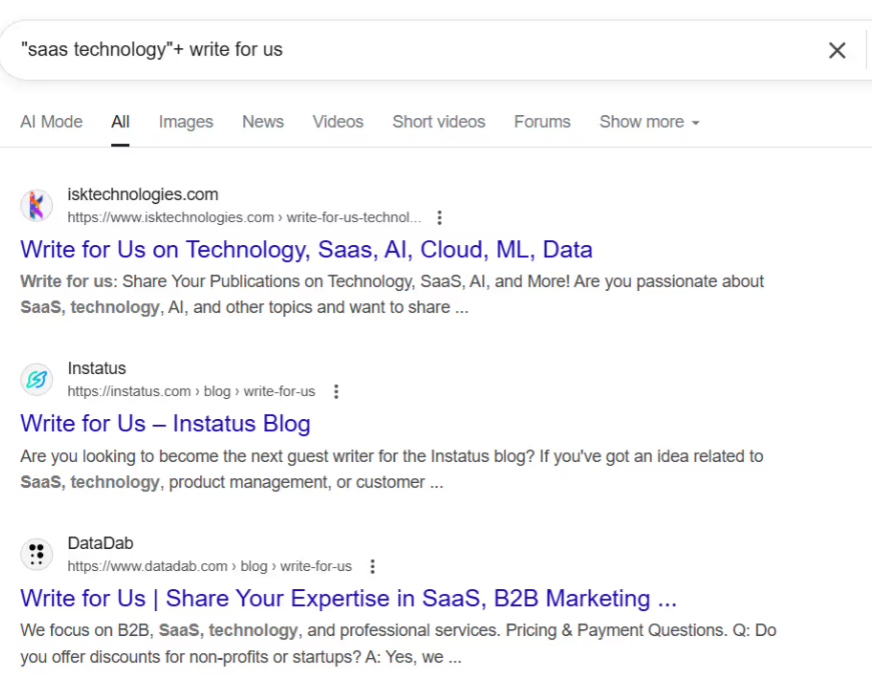
- Run contributor searches: Try queries such as “[your niche] + write for us,” “guest post,” “contribute,” or “submit an article.”
- Research competitor backlinks: Use Ahrefs or Semrush to find publications linking to competitors or comparable content. A backlink shows a relationship, not necessarily an open contribution opportunity.
- Verify the opportunity: Check the publisher’s contributor page, editorial guidelines, contact information, and accepted content formats.
- Build your shortlist: Record the target topic, publishing route, requirements, contact, expected cost, and update options.
AI can help organize and categorize these findings after you verify the underlying publisher pages. It should not turn an unverified backlink or domain into a presumed placement opportunity.
2. Create original, optimized content with expert review
Build the contribution around the host audience first, then optimize it for the relevant search intent. Using AI in content marketing can accelerate production, but a generated draft still needs expert and editorial review before publication.
A practical AI-plus-human workflow looks like this:
- Build the brief: Define reader intent, target query, publication requirements, evidence, and useful examples.
- Use AI for assistance: Organize research, develop outlines, support drafting, and suggest revisions or metadata.
- Add expert input: Include original experience, analysis, examples, and evidence that strengthen the contribution.
- Verify the draft: Check sources, factual accuracy, contextual links, claims, and statistics.
- Complete editorial review: Review voice, readability, structure, publisher fit, links, and metadata before approving publication.
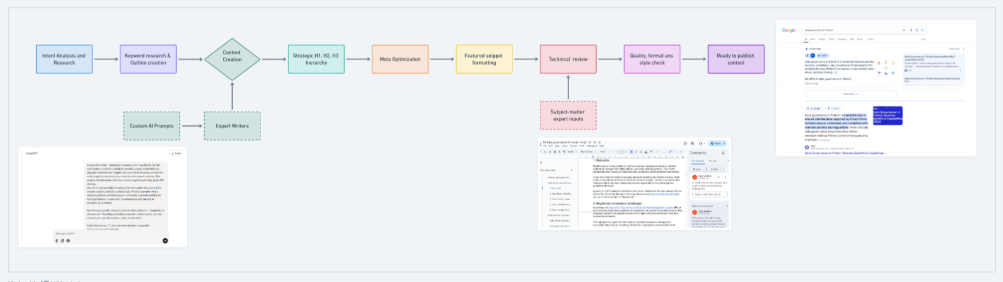
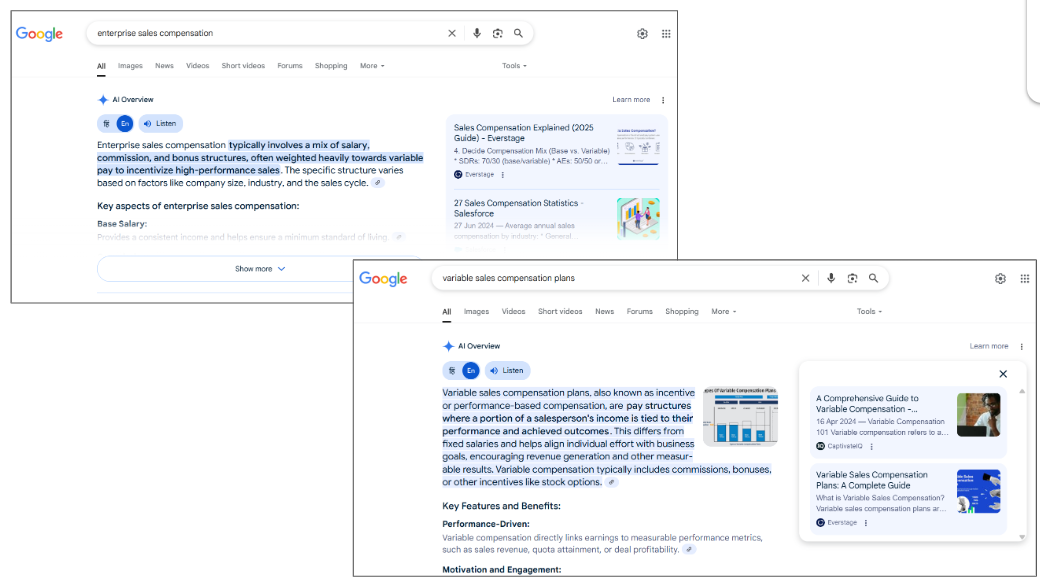
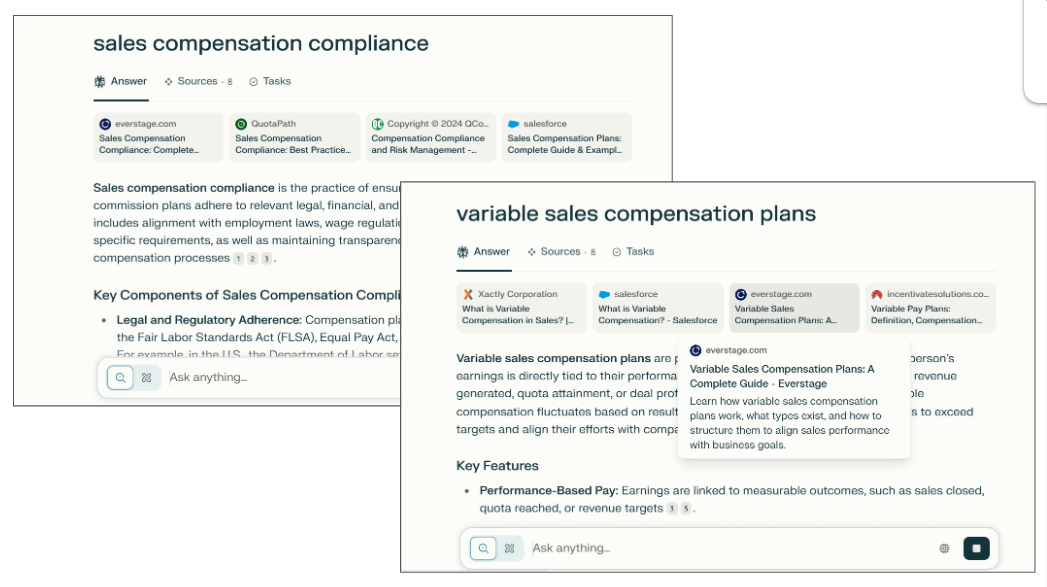
At RevvGrowth, we used this model with Everstage, scaling its content footprint from about 20 to 400+ pages while growing Top 3 rankings from 155 to 436 through AI-assisted production and expert review.
3. Submit and publish according to platform requirements
Publishing processes vary. Direct-publishing platforms may give you immediate editing access, while editorial publications can require pitching, review, revisions, and final approval.
Before submitting, confirm:
- The approved topic, format, word count, and authorship requirements.
- Who performs editorial and factual review.
- Whether contextual links and relevant CTAs are permitted.
- Who has final approval before publication.
- Whether you can request corrections or future updates.
- Who controls edits, removal, and republication after the piece goes live.
The Diplomat illustrates why current contributor requirements matter. Its submission process includes editorial review and specific contributor guidelines, so you should verify the publication’s latest requirements before producing the piece.
4. Promote your content and use links appropriately
Once the contribution is live, plan your content distribution around channels where the topic is genuinely useful rather than automatically cross-posting it everywhere.
- Email: Share it with relevant newsletter segments that would benefit from the topic.
- Social channels: Adapt the hook and context for each audience instead of reposting identical copy.
- Communities: Share only where the discussion and community rules make the contribution relevant.
- Contextual links: Use links to support claims, provide deeper information, or direct interested readers toward a logical next step.
Jesper Nissen’s example shows how one topic can be adapted across YouTube, Reddit, and social distribution. Treat that activity as distribution and referral reach rather than assuming social promotion caused higher search rankings.
5. Measure results and manage platform dependence
To measure SEO success, track the hosted page separately from what happens on your own website. This prevents estimated third-party visibility from being confused with directly measured traffic or conversions.
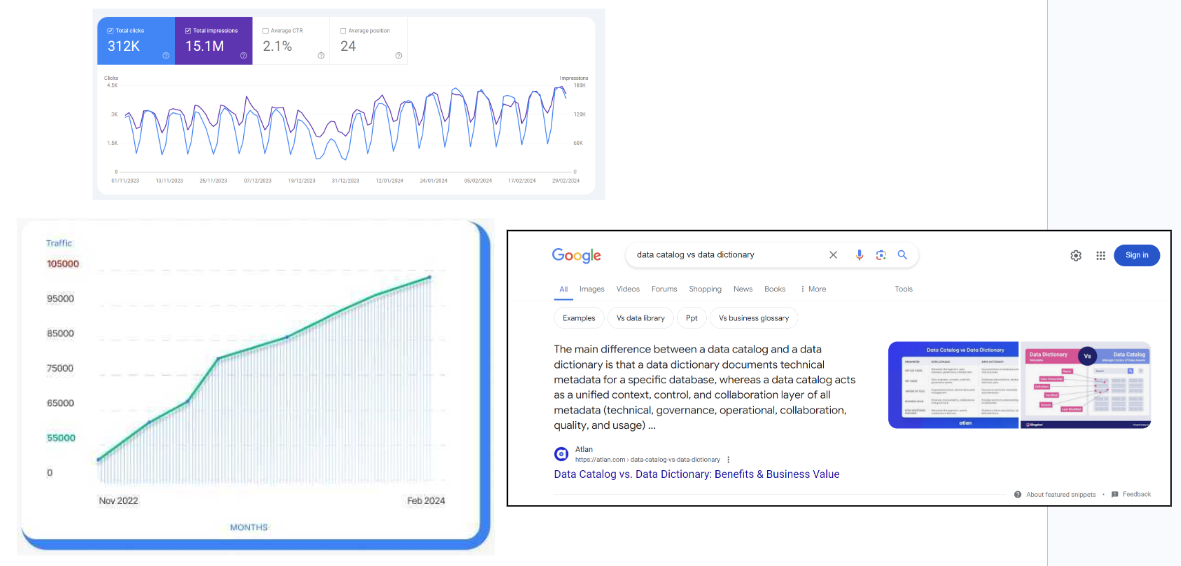
Owned content can compound without depending on a third-party publisher. With Atlan, RevvGrowth built a pillar-cluster content system around high-intent searches and scaled production with AI-assisted drafting plus human editorial review. That helped grow monthly organic traffic from 53,802 to 103,705.
To evaluate parasite SEO properly, separate the data you control from the data the publisher or third-party tools provide:
Compare those outcomes against the total cost of creating, placing, updating, and maintaining the contribution. Keep owned content running alongside third-party publishing within your broader enterprise SEO strategy, so your search program does not depend on assets another publisher controls.
Turn parasite SEO into measurable search growth
Parasite SEO can create useful visibility. The bigger opportunity is connecting that visibility to your broader search and pipeline goals.
With RevvGrowth, you’ll get a connected search strategy that helps you decide where third-party publishing makes sense, where owned content should carry more weight, and how each channel contributes to qualified demand.
- Clear content decisions: Know which topics should live on your own site and which may benefit from external distribution.
- Broader search visibility: An AI SEO approach helps strengthen visibility across traditional search and AI-driven discovery.
- Stronger off-site presence: Build authority across relevant external sources and generative search environments through GEO.
Book a strategy session with RevvGrowth to see where third-party publishing fits within your wider search strategy.
FAQs About Parasite AI SEO
.svg)


.webp)
.avif)