

.avif)
Introduction
According to 6sense's B2B buyer experience report, 95% of the time, buyers already have a shortlist before they ever speak to a sales representative. In other words, buyers have often researched vendors, compared solutions, and formed strong preferences long before they fill out a demo form or respond to an email.
That's why a demand generation strategy should focus on both creating demand and capturing it when buyers are ready.
If you're only focusing on buyers who are ready to purchase, you're already late. Instead, build awareness early, educate buyers throughout their journey, and stay visible until they're ready to buy.
A structured demand generation plan brings all of these efforts together. It aligns your goals, audience, channels, content, and measurement into a single roadmap that helps marketing and sales generate a predictable pipeline instead of isolated campaigns.
In this article, we'll show you how to build that plan, from choosing the right channels to measuring success with the metrics that matter most.
Every demand generation plan relies on a mix of channels to attract and engage buyers throughout their journey. Before we build the plan, let's take a quick look at the channels that power it.
A Quick Snapshot of Demand Generation Channels
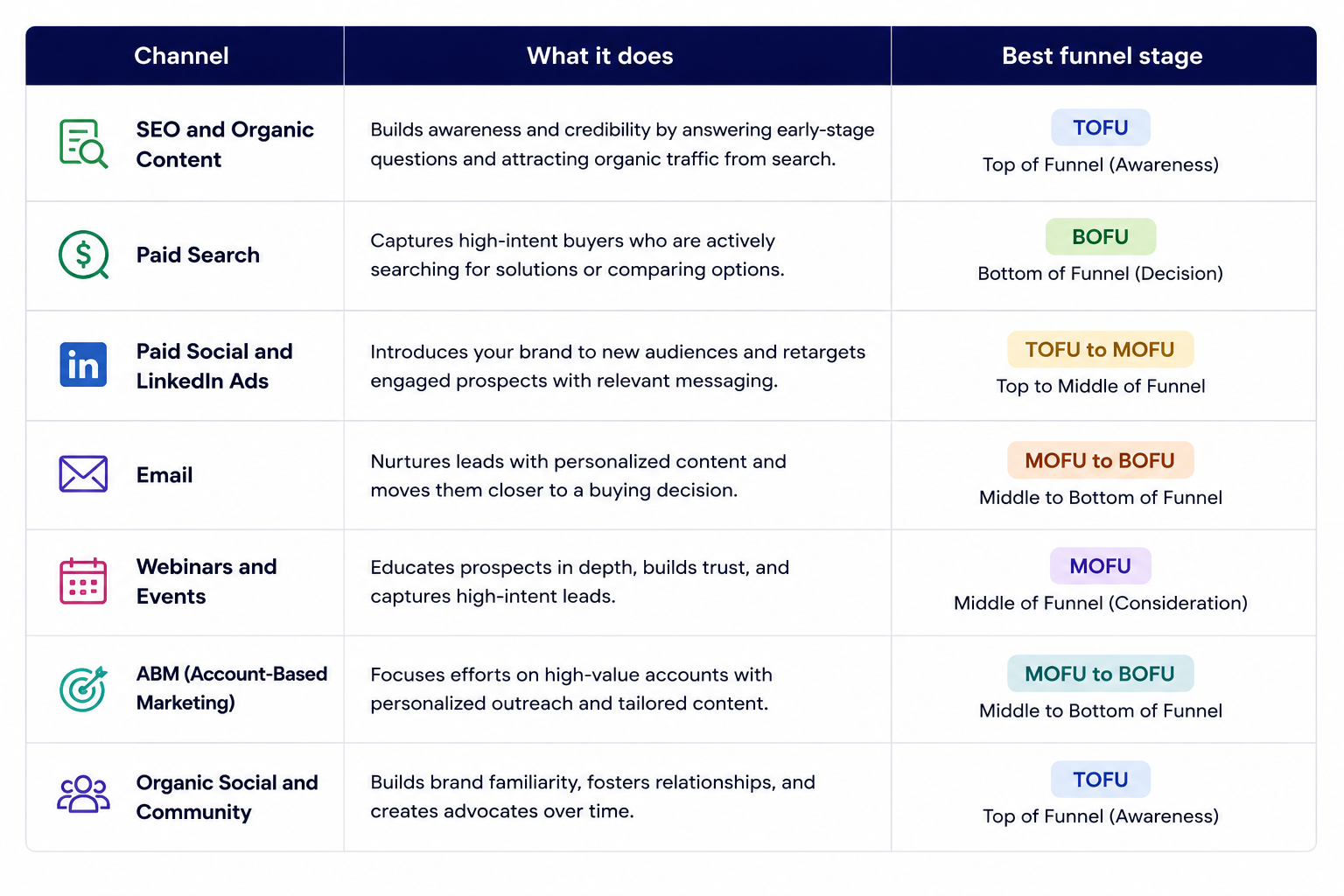
Every demand generation channel serves a different purpose in the buyer's journey. Here's a quick snapshot of the most common channels, what they do, and where they fit in the funnel.
Knowing the available channels is only the first step. The real impact comes from choosing the right demand generation strategy and combining those channels effectively. Here's how we build a demand generation plan, step by step.
How Revv Growth Builds a Demand Generation Plan, Step by Step
Every company has different goals, but the fundamentals of a successful demand generation plan remain the same. Here's the framework we follow at Revv Growth to build a predictable pipeline.
Step 1: Start with Revenue and Pipeline Goals
Every engagement begins with a business outcome. We define the revenue and pipeline targets marketing is expected to influence, then work backward to estimate the opportunities, SQLs, MQLs, and marketing investment needed to achieve them. This ensures that every campaign is tied to measurable business impact rather than lead volume alone.
Step 2: Build a Detailed Ideal Customer Profile (ICP)
The next step is understanding exactly who we're trying to reach. We start with a detailed client questionnaire to understand their business, target audience, product, and goals. We then build an ICP based on industry, company size, technology stack, pain points, and buying behavior.
We also map the buying committee, because B2B purchase decisions usually involve more than one person. According to Gartner, a typical B2B buying group includes 6 to 10 stakeholders, each bringing their own research into the decision-making process. That's why a single persona is usually not enough for an effective demand generation strategy.
Step 3: Map the Buyer's Journey
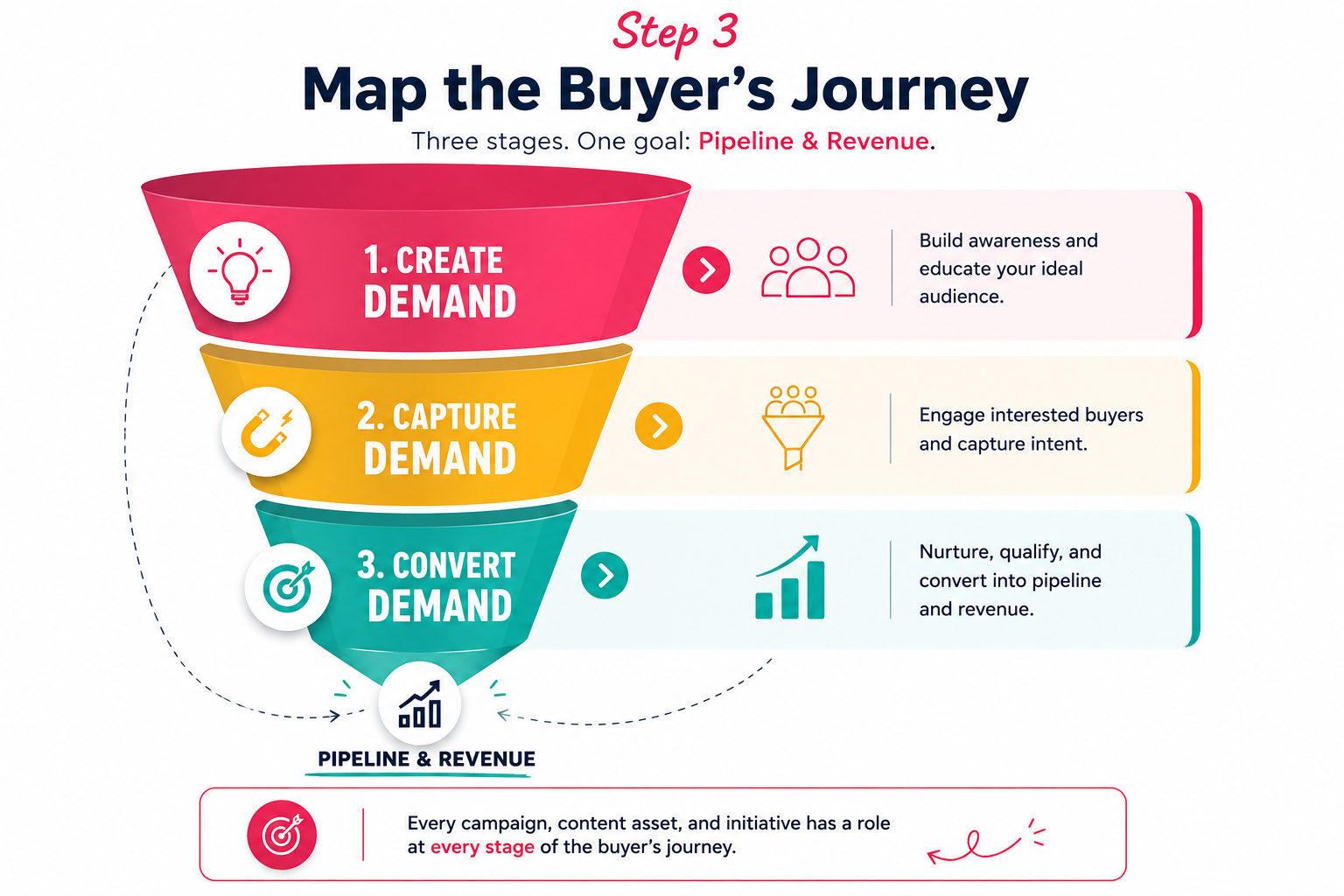
Before selecting channels, we map the entire buyer journey into three stages: creating demand, capturing demand, and converting demand. Every campaign, content asset, and marketing initiative is assigned a role within this journey. This helps us avoid a common mistake: investing heavily in awareness while leaving prospects with little support when they're ready to evaluate or buy.
Step 4: Build a Full-Funnel Content Engine
Content is the foundation of every demand generation program we build. We create educational blogs, pillar pages, comparison pages, product-led content, case studies, and customer stories that answer buyer questions at every stage of the funnel.
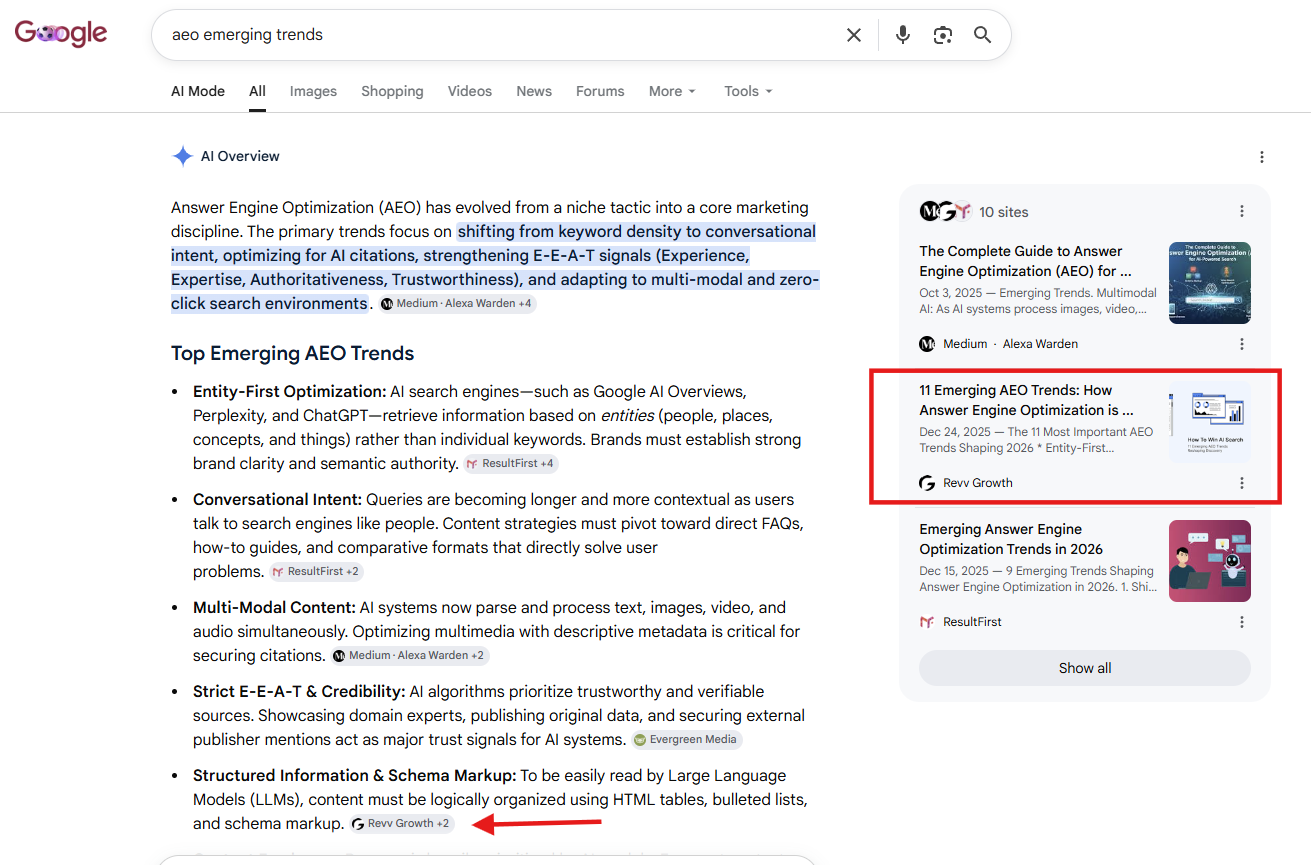
Revv Growth cited in AI Overviews for a high-intent keyword
Step 5: Prioritize the Right Demand Generation Channels
Rather than trying to be present on every platform, we focus on the channels that best match the client's audience, sales cycle, and growth goals. Depending on the business, this could include SEO, AI SEO (AEO and GEO), Google Ads, LinkedIn Ads, ABM, email marketing, webinars, or strategic partnerships.
Our strategy is simple: every channel should strengthen the others. For example, SEO builds long-term visibility, PPC captures high-intent demand, ABM targets strategic accounts, and email nurturing keeps prospects engaged throughout the buying journey.
Case Study: HyperVerge
HyperVerge needed a more qualified pipeline without increasing ad spend. Instead of expanding into more channels, we focused on improving channel efficiency through Google Ads optimization, refined targeting, landing page improvements, and ongoing campaign optimization. The result was:
- MQLs increased from 11 to 47 per month
- 400% increase in conversion rate
- MRR grew from $12K to $70K
This reinforces an important demand generation principle: better channel selection and optimization often outperform adding more channels.
Read the full HyperVerge case study here
Step 6: Execute Integrated Campaigns with AI Workflows
Execution is where strategy becomes the pipeline. Instead of managing every campaign manually, we use AI-powered workflows to help our team move faster and focus on higher-value work.
As campaign complexity grows, manual execution becomes a bottleneck. To solve this, we've built internal AI workflows that support our strategists.
One example is our Claude Code-powered PPC agent, which assists with campaign monitoring, optimization, and repetitive account management tasks.
These systems don't replace strategy. They help our team spend more time on optimization and less on repetitive execution.
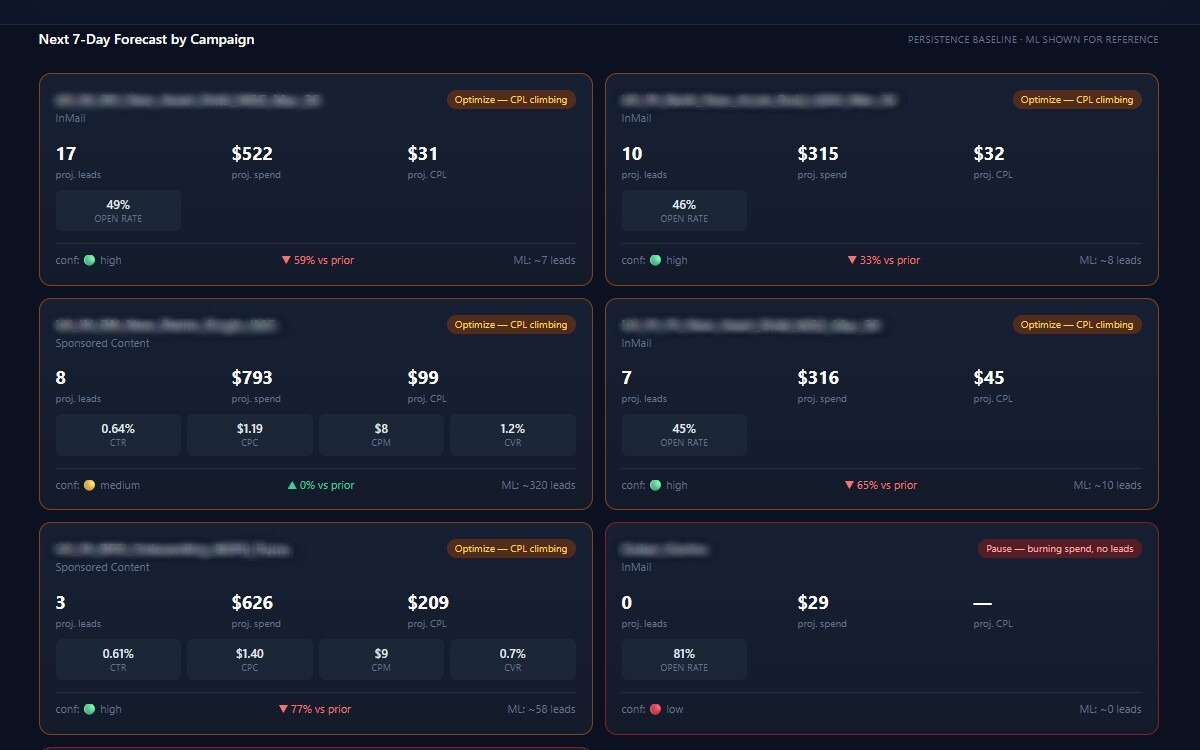
Our PPC AI Agent launching a Google Ads Campaign
Step 7: Optimize Conversion Paths and Lead Nurturing
Generating traffic is only part of the equation. We optimize landing pages, demo requests, calls to action, and lead forms to improve conversion rates. We also connect CRM workflows, lead scoring, and marketing automation so prospects receive relevant follow-ups based on their engagement and buying intent, helping sales teams focus on the opportunities most likely to convert.
Step 8: Align Marketing and Sales
Demand generation succeeds when marketing and sales operate as one team. We establish shared definitions for qualified leads, agree on handoff processes, and align both teams around common pipeline goals. Regular feedback between marketing and sales helps improve campaign quality, messaging, and conversion rates over time.
Step 9: Measure, Optimize, and Scale
A demand generation plan should evolve as your business grows. We continuously monitor performance across SEO, AI visibility, PPC, email, and ABM while tracking the metrics that matter most: pipeline generated, SQLs, customer acquisition cost (CAC), return on ad spend (ROAS), and revenue influenced.
This data-driven approach helps us identify what's working, optimize underperforming campaigns, and invest more in the channels generating the greatest business impact.
Getting results also means avoiding the mistakes that hold most demand generation plans back. Here are the most common ones.
Where Demand Generation Plans Usually Go Wrong
Even the best demand generation plans can fall short if they're built on the wrong priorities. Over the years, we've seen the same mistakes prevent B2B SaaS companies from generating a consistent pipeline. Here are the pitfalls to avoid.
1. Chasing Only In-Market Buyers
Focusing only on buyers who are actively looking for a solution today may generate short-term leads, but it limits long-term growth. A strong demand generation strategy also builds awareness among future buyers, so your brand is already familiar when they're ready to purchase.
2. Treating Demand Generation Like Lead Generation
Not every interaction should be optimized for form fills. Gating every asset and pushing for immediate conversions reduces top-of-funnel engagement. Demand generation is about educating buyers first and capturing leads when they're ready.
3. Poor Marketing and Sales Alignment
When marketing and sales aren't aligned, good leads are often missed. Shared lead definitions, clear handoffs, and timely follow-ups help turn more opportunities into revenue.
4. Tracking Vanity Metrics
Traffic, clicks, and impressions can indicate activity, but they don't measure business impact. Focus on metrics like qualified pipeline, SQLs, conversion rates, customer acquisition cost (CAC), and revenue influenced.
5. Spreading Resources Across Too Many Channels
Trying to be everywhere often spreads your budget and resources too thin. Instead, focus on the channels that best fit your audience and business goals, optimize them, and expand only when you're ready.
Avoiding these mistakes is only half the battle. To understand whether your demand generation plan is delivering real business results, you need to measure the right metrics. Here's what to track.
Essential Metrics to Track
Our demand generation team measures metrics that tie directly to pipeline and revenue. Here are the KPIs we track to understand what's working, what needs improvement, and where to invest next.
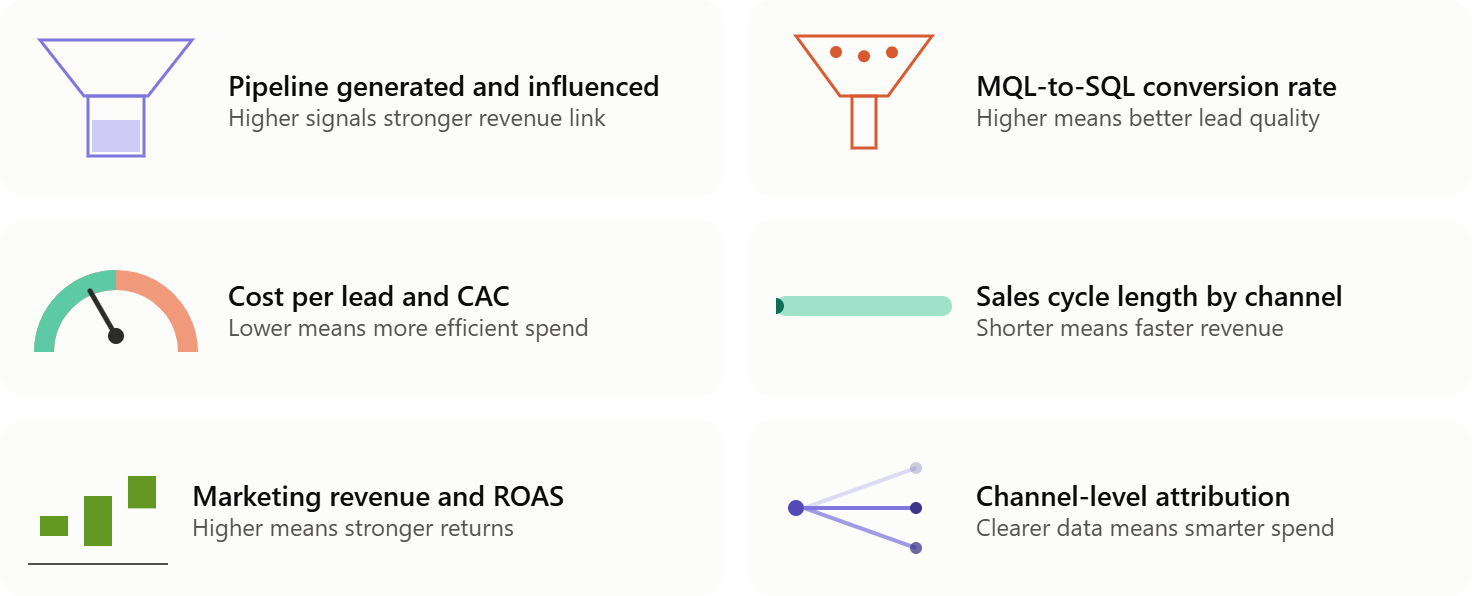
- Pipeline Generated and Influenced
This is the clearest indicator of whether demand generation is driving business growth. Instead of measuring traffic or leads, track how much pipeline marketing creates or influences.
What to watch: If the pipeline stays flat despite growing traffic, revisit your ICP, messaging, or conversion paths.
- MQL-to-SQL Conversion Rate
A high number of MQLs means little if they don't become sales opportunities. This metric tells you whether you're attracting the right audience.
What to watch: A declining conversion rate often signals weak targeting, poor lead scoring, or a mismatch between marketing and sales.
- Cost Per Lead (CPL) and Customer Acquisition Cost (CAC)
These metrics measure how efficiently you're generating customers, not just leads.
What to watch: If CAC continues to rise while pipeline remains flat, review your channel mix, campaign targeting, and landing page performance before increasing spend.
- Sales Cycle Length
Measure how long it takes prospects from each channel to become customers.
What to watch: Compare sales cycle length by channel. Channels that consistently convert faster with similar deal sizes often deserve more investment, while longer cycles may signal the need to improve lead quality, nurturing, or the buying experience.
- Marketing-Sourced Revenue and Return on Ad Spend (ROAS)
Lead volume is important, but it doesn't tell the whole story. Marketing-sourced revenue and ROAS show whether your campaigns are generating real business impact.
What to watch: A campaign with fewer leads but higher revenue is often worth scaling over one that simply generates more MQLs.
- Channel-Level Attribution
Understanding which channels influence conversions helps you allocate budget more effectively.
What to watch: Don't evaluate channels in isolation. SEO may create awareness, while email or PPC drives the final conversion. Multi-touch attribution gives a more accurate picture.
Tracking the right metrics gives you the insights needed to improve performance over time. But even the best demand generation plan isn't static. It should evolve as your business, buyers, and market change.
Key Takeaways
A successful demand generation plan comes down to a few core principles. Here's a quick recap of the most important lessons from this guide.
- Start with revenue and pipeline goals, not marketing tactics.
- Build your plan around your ICP and the entire buying committee.
- Balance demand creation with demand capture using the right channel mix.
- Create content for every stage of the buyer journey and optimize it for SEO, AEO, and GEO.
- Measure success using pipeline, revenue, CAC, and conversion metrics instead of vanity metrics.
- Review and optimize your demand generation plan regularly to improve results over time.
Conclusion
A successful demand generation plan isn't about being present on every channel or generating as many leads as possible. It's about creating a system that consistently builds awareness, captures demand, and converts the right prospects into pipeline and revenue.
For B2B SaaS companies, that means aligning every marketing activity with the buyer's journey, investing in the channels that matter most, measuring business outcomes instead of vanity metrics, and continuously optimizing based on performance. The companies that treat demand generation as an ongoing process are the ones that build predictable, sustainable growth.
If you're ready to build or refine your demand generation strategy, start with a clear plan, focus on execution, and let data guide every decision.
.svg)


.webp)
.avif)