


B2B SaaS companies should prioritize AI SEO first when their search foundation is weak, then build AEO into their content structure, and invest in GEO to earn citations and recommendations across AI engines.
GEO, AEO, and AI SEO are not competing programs. They are layers of the same visibility system: crawlable authority, extractable answers, and trusted AI citations.
What do GEO, AEO, and AI SEO actually mean?
GEO, AEO, and AI SEO are three overlapping ways to optimize for modern search behavior. SEO helps content rank and get discovered. AEO helps content become the direct answer. GEO helps a brand get cited, mentioned, or recommended by generative AI systems.
Here is the clean version:
AI SEO
AI SEO is the practice of improving organic visibility in search environments where AI summaries, AI Overviews, conversational results, and traditional rankings all influence discovery. It keeps the SEO fundamentals but adds answer formatting, entity clarity, structured data, and AI-crawler accessibility.
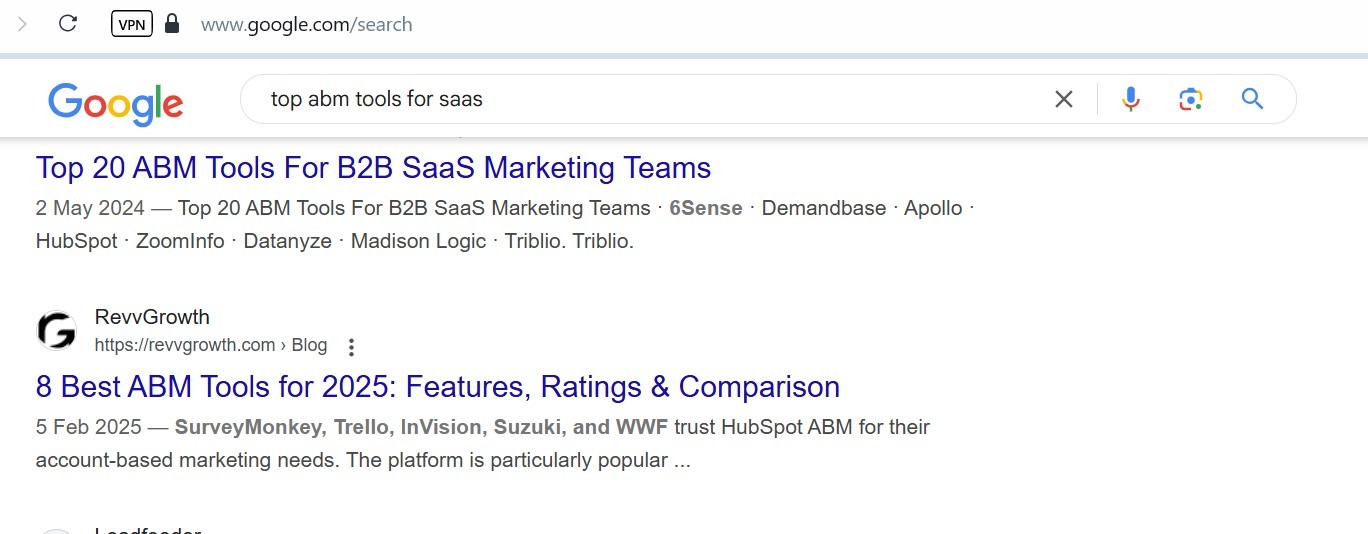
Screenshot: Our ABM Tools Blog coming up in First page in SERP results.
AEO
Answer Engine Optimization is the practice of structuring content so answer engines can identify, extract, and use a direct response to a user question. AEO favors concise definitions, short answer blocks, FAQs, tables, and clear question-based headings.
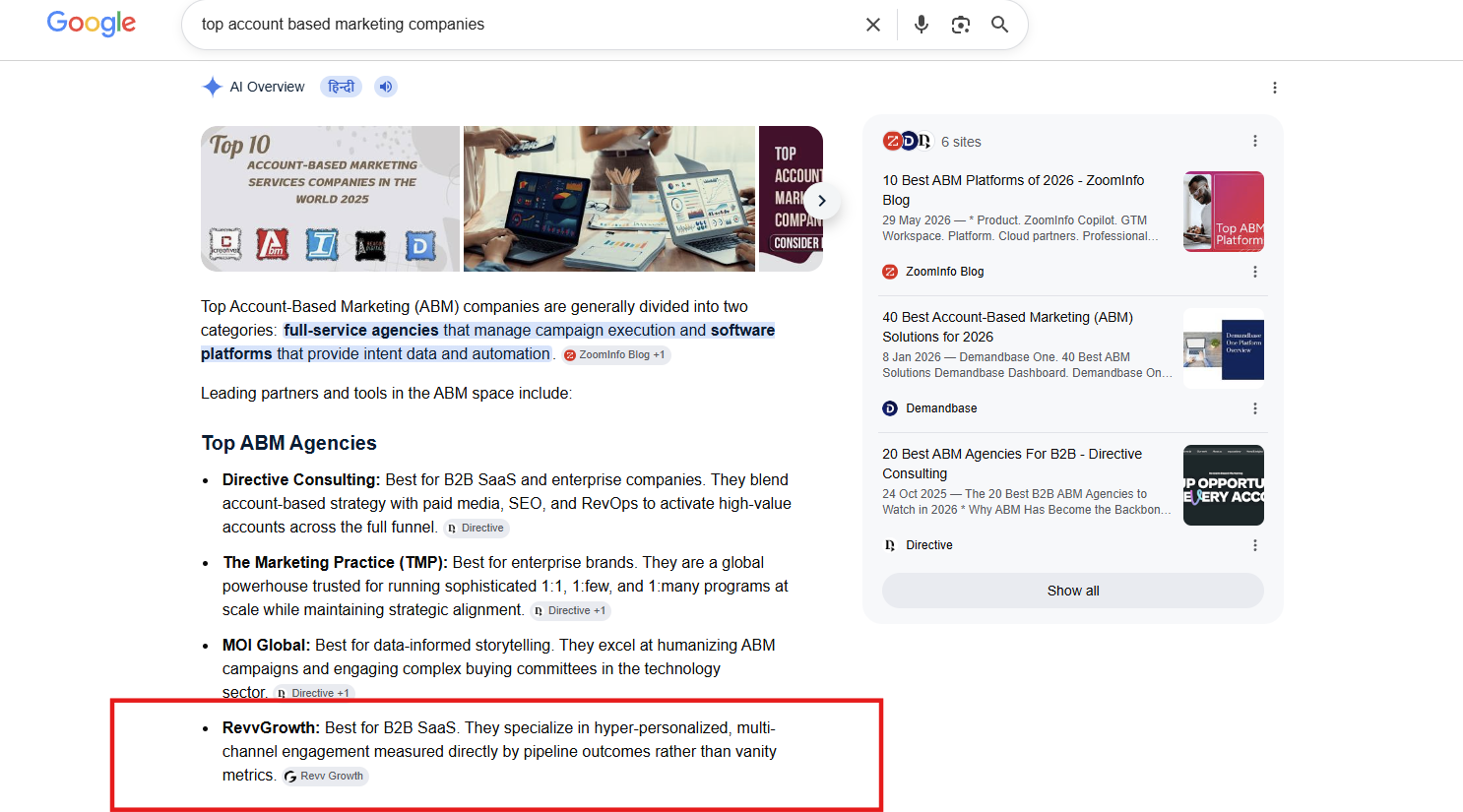
Screenshot: Our Blog coming up in AI overviews for “top account based marketing companies” keyword.
GEO
Generative Engine Optimization is the practice of improving how generative AI systems cite, mention, synthesize, or recommend a brand in response to prompts. GEO depends on content quality, entity strength, external validation, and platform-specific citation behavior.
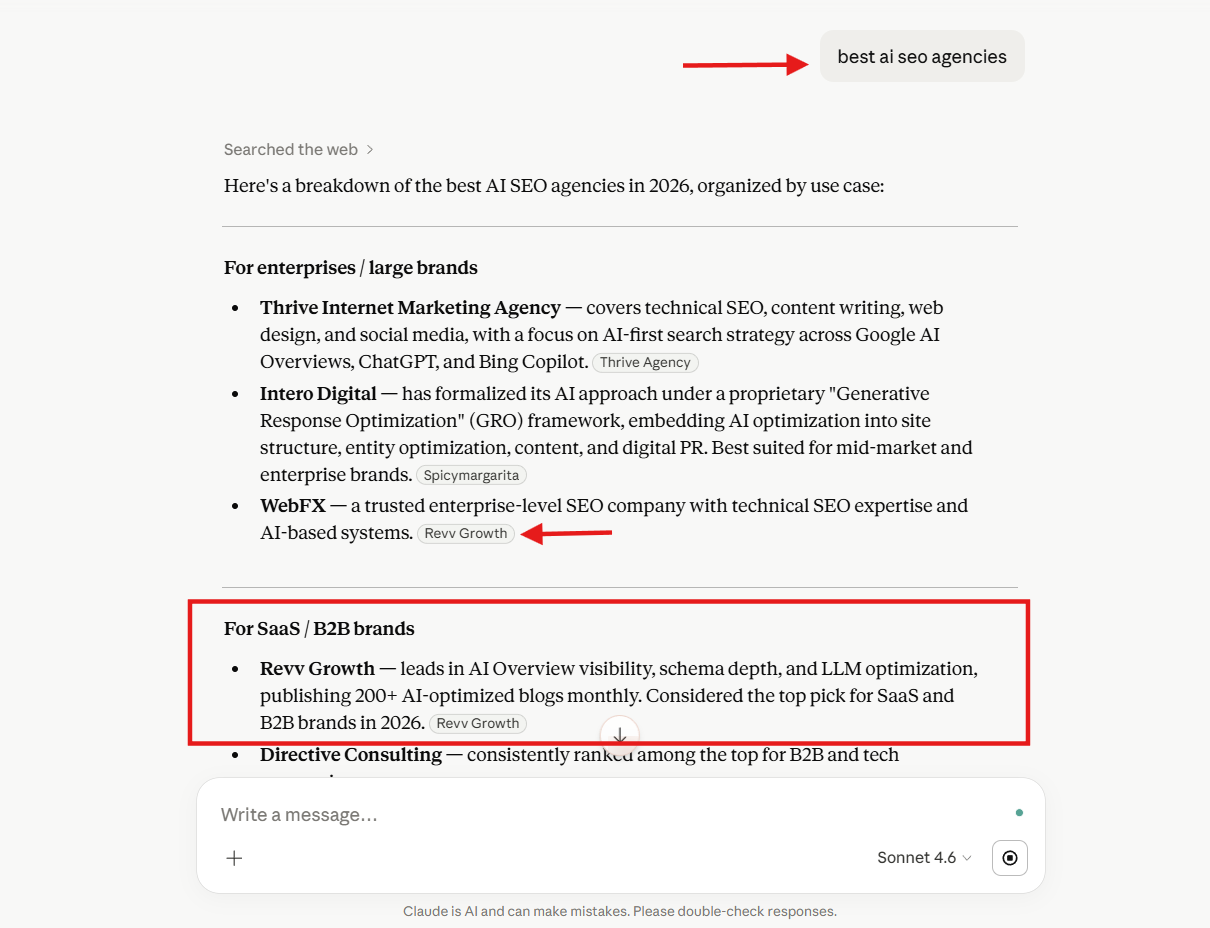
Screenshot: RevvGrowth is suggested by ChatGPT as the “best AI SEO agency” for B2B SaaS
For B2B SaaS teams, this distinction matters because each layer solves a different commercial problem. SEO helps you get found. AEO helps you become the answer. GEO helps you become the recommended vendor, framework, or source when buyers ask AI tools for advice.
Why are B2B SaaS teams confused about which one to prioritize?
B2B SaaS teams are confused because the market turned one search shift into five acronyms. A founder hears "GEO is the new SEO." A CMO hears "AEO is the future." The SEO lead hears "AI SEO is just SEO with a new label." The content team gets asked to publish more AI-ready blogs without knowing what "AI-ready" means.
That confusion creates three common mistakes:
- First, teams chase GEO before they have enough authority to be cited. They ask why ChatGPT does not mention them, but their website has thin category pages, weak internal linking, no authoritative comparison content, and no clear entity footprint beyond their own domain.
- Second, teams treat AEO as a formatting trick. They add FAQs and short answers, but the page still lacks a strong point of view, credible sources, author experience, and a clear path from answer to buyer action.
- Third, teams keep doing traditional SEO without adapting to AI search behavior. They write long articles for rankings, but the most useful answer is buried under a slow introduction, vague H2s, and paragraphs that make sense only when read in full.
The right move is not to pick one acronym and ignore the rest. The right move is to sequence them based on maturity.
Which should a B2B SaaS company prioritize first?
A B2B SaaS company should prioritize AI SEO first, AEO second, and GEO third if it is starting from an average SEO baseline. That does not mean GEO waits for a year. It means the first operating priority is to make the site technically accessible, topically deep, and commercially aligned before expecting AI systems to cite it.
Use this decision rule:
For most B2B SaaS companies, the practical first step is AI SEO because it includes the foundations that AEO and GEO need. If Google cannot crawl, understand, and rank your best content, AI systems have less reliable material to retrieve, summarize, or cite.
Google's own guidance for AI features emphasizes the same broad search fundamentals: create helpful, reliable, people-first content and make it accessible to Search. OpenAI's crawler documentation also makes clear that AI-search visibility depends partly on whether crawlers can access your content. Structured data from Schema.org helps machines understand entities, authorship, page type, and relationships.
So, do not build a citation strategy on top of a messy content system.
How is AI SEO different from traditional SEO?
AI SEO is traditional SEO upgraded for a search world where users may never click a blue link. It still requires crawlability, indexability, internal linking, topical authority, page speed, helpful content, and backlinks. But it adds a new requirement: your content must be easy for AI systems to retrieve, interpret, summarize, and trust.
Traditional SEO asks, "Can this page rank?"
AI SEO asks, "Can this page rank, get summarized, get cited, and still create pipeline if the buyer does not click immediately?"
That shift changes the operating model.
AI SEO in practice
Atlan is a clean example of this shift. RevvGrowth helped Atlan move beyond a traditional SEO playbook and build an AI-search content engine for high-intent data catalog, data governance, and modern data stack keywords.
The work combined SEO fundamentals with answer-first structure, semantic optimization, human editorial QA, and GEO-driven snippet optimization.
The result was not just more content. Atlan published 130+ SEO and GEO blogs per month, grew from 17K to 128K monthly organic visitors in 11 months with $0 paid media spend, won multiple Google featured snippets, and was cited across 4+ AI platforms.

Screenshot: Atlan is cited as the primary source in Google AI Overview for data catalog vs data lineage
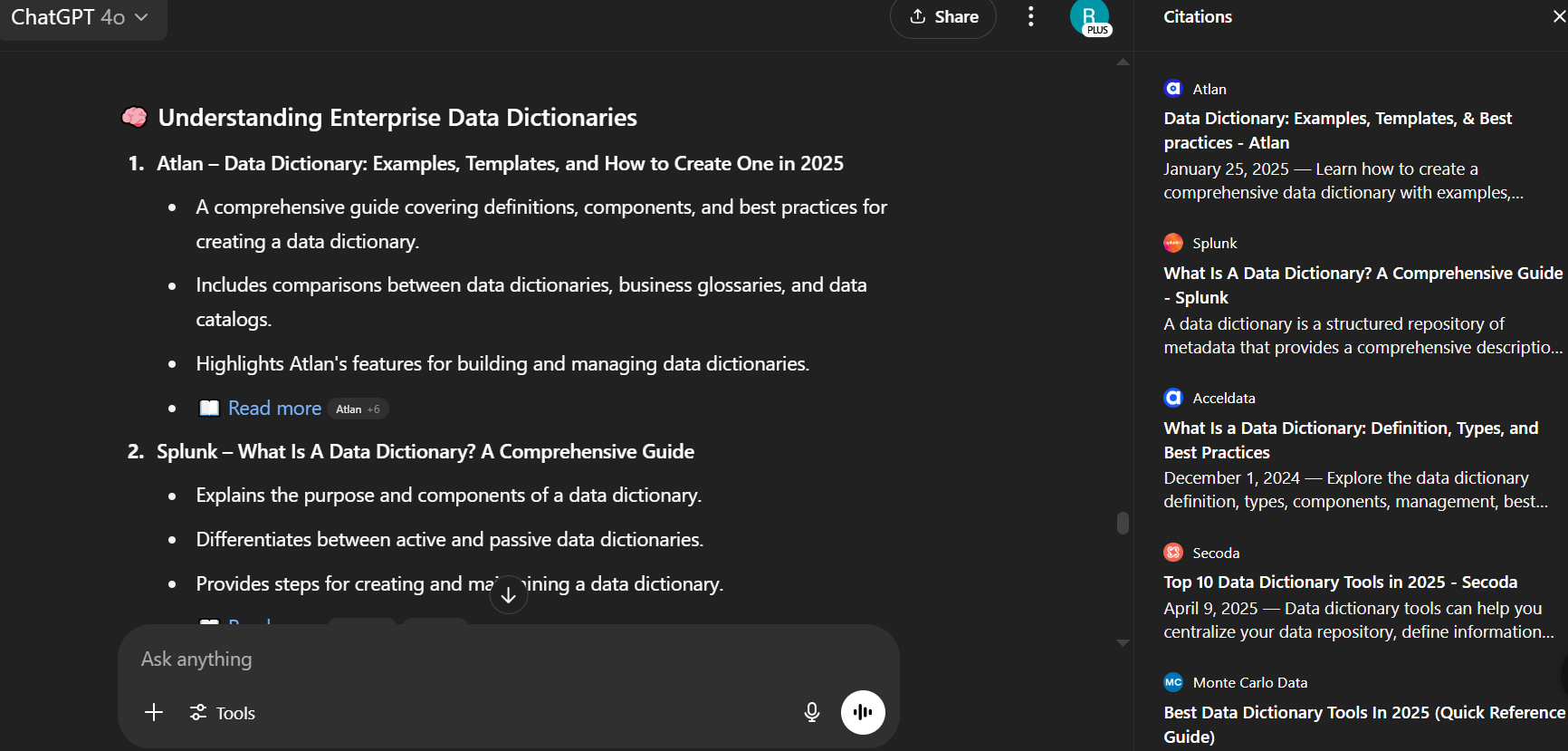
Screenshot: ChatGPT 4o lists Atlan as the #1 citation for enterprise data dictionaries
That is the difference between traditional SEO and AI SEO in practice. Traditional SEO would measure the article by ranking position and organic sessions. AI SEO also asks whether the content can become the cited source when a buyer asks an AI system to explain, compare, or shortlist solutions.
For B2B SaaS, AI SEO should also connect to revenue operations. A page that ranks but attracts students, job seekers, or low-fit traffic is not a growth asset. A page that ranks for a buying committee’s actual questions, earns AI citations, and supports sales conversations is a pipeline asset.
When does AEO become the highest priority?
AEO becomes the highest priority when your content can be discovered but fails to become the answer. This often happens when a SaaS company has decent topical coverage but weak answer architecture.
Signs you need AEO first:
- Your pages rank, but competitors win featured snippets or AI Overview citations.
- Your articles have long introductions before giving the answer.
- Your H2s are clever, branded, or vague instead of question-based.
- Definitions are missing or buried.
- You have few tables, summaries, or structured comparisons.
- FAQs exist, but they answer generic questions instead of buyer questions.
- Your content reads well for humans but is hard for machines to extract.
AEO is where content becomes more modular. Each section should answer one question clearly enough that it can be copied into an AI answer without losing meaning.
A practical AEO section has four parts:
1. A question-based H2.
2. A direct answer in the first 40 to 60 words.
3. Supporting context, examples, or data.
4. A clear next step, table, checklist, or related question.
For example, do not open a section with:
"The future of search is changing rapidly as buyers explore new ways to discover information."
Open with:
"AEO matters for B2B SaaS because buyers increasingly ask search and AI tools direct questions before they visit vendor websites. If your content is not structured as a clear answer, AI systems may summarize a competitor instead."
That second version is more useful to the reader and more extractable for AI systems.
When does GEO become the highest priority?
GEO becomes the highest priority when your company has enough content depth, topical authority, and market credibility to compete for AI citations. At that stage, the constraint is trust, entity strength, and inclusion in the sources AI systems choose.
Signs you are ready to prioritize GEO:
- You already rank for meaningful non-branded SaaS category terms.
- You have strong comparison, alternatives, use-case, and problem-aware content.
- Your content is cited in Google snippets or AI Overviews for some queries.
- You have credible case studies, customer proof, expert-authored content, and third-party mentions.
- You can track AI citations across ChatGPT, Perplexity, Google AI Overviews, Gemini, Claude, and Copilot.
- You have a team that can refresh content, test prompts, and build off-site authority.
GEO is not only about adding "LLM-friendly" copy to your website. It is about making your brand a trusted entity in the knowledge layer AI systems use.
That includes:
- Strong category pages.
- Original frameworks.
- Comparison pages.
- Research-backed articles.
- Expert bylines.
- Customer proof.
- Third-party mentions.
- Community discussion.
- Structured data.
- Crawlable content.
- Consistent entity information across the web.
For SaaS companies, GEO is especially important for prompts like:
- "What are the best tools for [category]?"
- "Which vendor should I consider for [use case]?"
- "Compare [your product] with [competitor]."
- "What is the best way to solve [pain point]?"
- "Which companies are known for [category capability]?"
Those prompts sit close to buying committee behavior. A buyer may ask an AI tool to shortlist vendors, compare approaches, explain risks, or recommend evaluation criteria before visiting a pricing page.
How should B2B SaaS teams decide based on maturity?
The easiest way to prioritize is to look at your current maturity, not the acronym getting the most attention.
This maturity model matters because AI visibility is not a single metric. A SaaS company can have organic traffic and still be invisible in AI answers. It can get AI mentions and still generate low-quality demand.
The priority should follow the business constraint.
If the constraint is discoverability, fix AI SEO.
If the constraint is answer extraction, fix AEO.
If the constraint is citation and recommendation, fix GEO.
If the constraint is revenue quality, connect the whole system to RevOps.
What is the RevvGrowth prioritization framework?
At RevvGrowth, we use a practical framework called FAC: Foundation, Answerability, Citation.
The framework is simple:
1. Foundation: Can search engines and AI crawlers access, understand, and trust the page?
2. Answerability: Can the page provide a clear answer that can be extracted without extra context?
3. Citation: Does the brand have enough authority, proof, and external validation to be cited or recommended?
This prevents teams from over-investing in the wrong layer.
Layer 1: Foundation
Foundation includes technical SEO, information architecture, internal linking, metadata, structured data, content quality, and topical coverage.
For B2B SaaS, the foundation also includes commercial mapping. A keyword is useful when it connects to a buyer's problem, a product capability, a sales conversation, or a measurable pipeline stage.
Layer 2: Answerability
Answerability is the AEO layer. It asks whether each page has self-contained answers for real buyer questions.
Strong answerability includes:
- Direct definitions
- Question-led headings
- Short summary blocks
- Tables
- Decision criteria
- Examples
- FAQs
- Clear source attribution
Layer 3: Citation
Citation is the GEO layer. It asks whether AI systems have a reason to mention your brand when generating a response.
Strong citation signals include:
- Original frameworks.
- Expert-authored pages.
- Updated content.
- Third-party mentions.
- Customer proof.
- Consistent brand/entity data.
- Category authority.
- External links from credible sources.
- Platform-specific visibility testing.
This is where RevvGrowth’s OvalEdge work becomes a useful example. OvalEdge entered the engagement with 2,130 clicks per month across 715K impressions, an average position of 16.2, and zero measurable LLM referral traffic. The brand was ranking broadly, but not strongly enough to become a trusted source in AI-led discovery.
RevvGrowth built a full SEO and GEO content system for OvalEdge: technical SEO fixes, pillar-cluster architecture, 30+ SEO and GEO-optimized cluster articles per month, short answer blocks, question-led headings, extraction-ready sections, schema implementation, and dedicated “LLM Packs” for ChatGPT, Perplexity, Gemini, Claude, and Google AI Overview inclusion.
The results show how FAC works in practice. In the selected period from December 1, 2025 to February 28, 2026, OvalEdge generated 21.0M impressions, up 18.5M from the previous 90 days, and 15.3K clicks, up 8.3K from the previous 90 days. Year to date, OvalEdge reached 45.2M impressions, up 1,984.8%, and 36.0K clicks, up 229.2%.
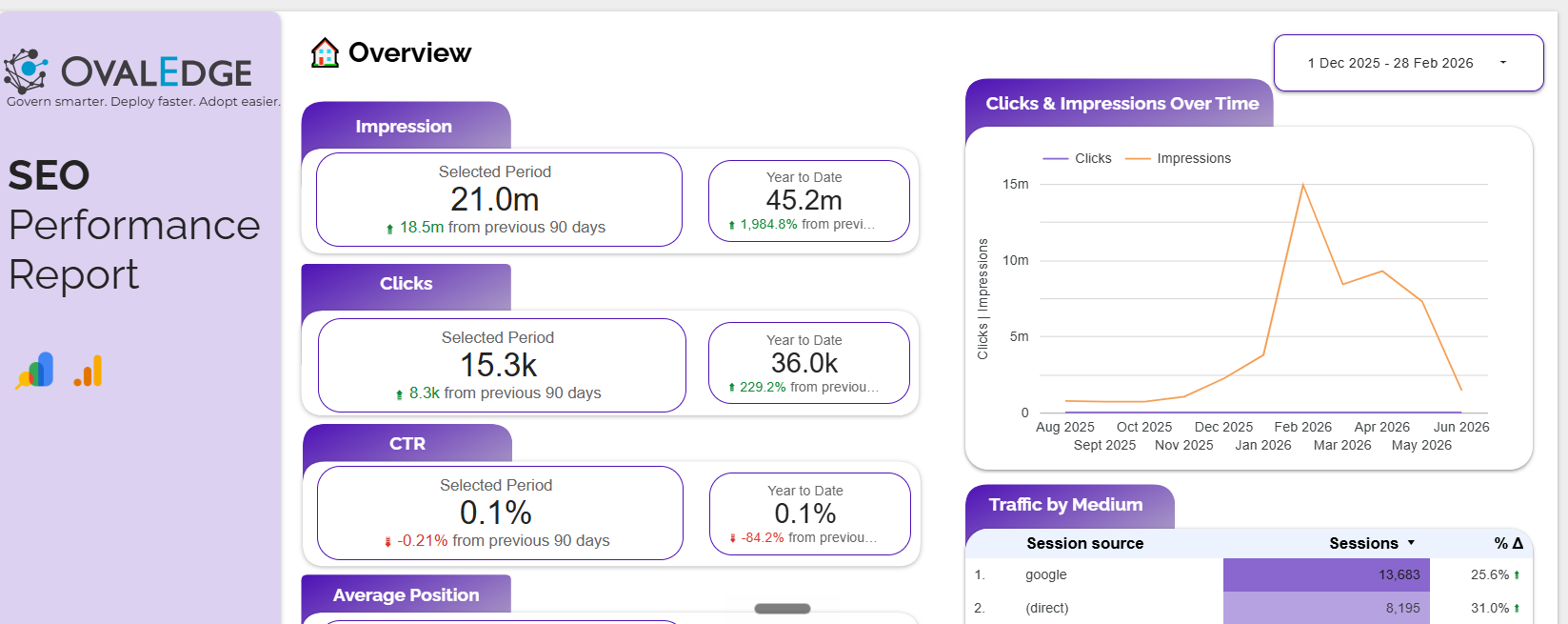
Screenshot: OvalEdge SEO Performance Report: 21.0M impressions and 15.3K clicks in the selected period, with impressions up 18.5M and clicks up 8.3K in 90 days.
Those outcomes did not come from chasing one acronym. They came from building a content engine that connected topical depth, structured answers, AI citation readiness, and consistent publishing.
What should the first 90 days look like?
The first 90 days should create a working AI visibility engine, not a disconnected set of blog posts. A B2B SaaS team should leave the first quarter with a stronger technical base, clearer keyword strategy, answer-ready content, AI visibility testing, and a measurement dashboard.
Days 1-15: Audit the foundation
Start with a direct audit:
1. Crawl the site and identify indexability problems.
2. Review robots.txt for important search and AI crawler access.
3. Check whether core pages are server-rendered and readable without heavy JavaScript.
4. Review sitemap coverage.
5. Audit metadata and canonical tags.
6. Check Article, Organization, Person, BreadcrumbList, and relevant product or software schema.
7. Map existing pages to ICP pain points, product use cases, and funnel stages.
This step keeps the team honest. If the site has crawl problems, thin content, and unclear product positioning, jumping to GEO will create reports instead of results.
Days 16-30: Build the AI SEO keyword and topic map
Create a topic map around buyer problems, category terms, alternatives, integrations, use cases, pain points, jobs-to-be-done, and comparison queries.
For each topic, document:
- Primary keyword.
- Secondary keywords.
- Prompt variants.
- Search intent.
- Funnel stage.
- Product connection.
- Sales objection answered.
- Recommended page type.
- Internal links.
- AI-answer opportunity.
This is where B2B SaaS teams often find gaps. They may have many TOFU blogs but few comparison pages. They may rank for broad education queries but miss use-case keywords. They may have product pages but no content that answers how buyers actually evaluate the category.
Days 31-50: Rewrite for AEO
Pick the pages with the strongest current rankings or highest commercial value. Rewrite them for answerability.
For each page:
1. Add a direct answer in the introduction.
2. Turn vague H2s into question-based H2s.
3. Add definition blocks for important terms.
4. Add comparison tables.
5. Add a TL;DR section.
6. Add FAQs based on real buyer questions.
7. Add source-backed claims.
8. Add internal links to related service, product, and guide pages.
Do not make the content robotic. AEO is about making useful expertise easy to extract.
Days 51-70: Add GEO citation signals
Once priority pages are technically accessible and answer-ready, strengthen the citation layer.
Focus on:
- Expert bylines and author bios.
- Original frameworks and named processes.
- Case-study proof.
- Fresh publication and modified dates.
- External citations to credible sources.
- Third-party mentions and community validation.
- Consistent organization schema and sameAs links.
- Clear product/category language.
- Comparison and alternatives content.
For SaaS teams, the most useful GEO assets are often not generic blogs. They are pages that answer high-intent evaluation questions better than anyone else.
Days 71-90: Track prompts, citations, and pipeline impact
Create a measurement loop:
1. Track rankings for priority keywords.
2. Test target prompts in ChatGPT, Perplexity, Google AI Overviews, Gemini, Claude, and Copilot.
3. Record whether the brand is mentioned, cited, recommended, ignored, or misrepresented.
4. Track AI referral traffic where available.
5. Watch branded search lift.
6. Review assisted pipeline and SQL quality from organic journeys.
7. Refresh pages based on what AI systems cite.
The first 90 days should produce a baseline. After that, the work compounds through content depth and authority building.
What prompts should you optimize for AI and LLM visibility?
You should optimize for prompts that match how buyers ask for help before they talk to sales. The best prompts are not only keyword variants. They are buying-committee questions.
Use these prompt categories:
For this article, RevvGrowth should test these prompts after publishing:
1. "Should a B2B SaaS company prioritize GEO, AEO, or AI SEO first?"
2. "What is the difference between GEO, AEO, and AI SEO?"
3. "What is a good AI SEO roadmap for a SaaS company?"
4. "How do you optimize SaaS content for Google AI Overviews?"
5. "How can a B2B SaaS company get cited by ChatGPT and Perplexity?"
6. "What metrics should SaaS teams use to measure GEO?"
7. "Who offers SEO, AEO, and GEO strategy for B2B SaaS companies?"
Each prompt should be tested monthly. The goal is to understand which sources are being cited, which answer patterns are winning, and what authority gaps need to be closed.
What should B2B SaaS teams measure?
B2B SaaS teams should measure AI search with a blended scorecard. Rankings and traffic still matter, but they are no longer enough.
The most important principle is that AI visibility must be tied to revenue quality. A brand mention in an AI answer is useful only if it supports awareness, trust, shortlist inclusion, or pipeline creation.
That is why RevvGrowth connects SEO, AEO, GEO, RevOps, MarketingOps, attribution, and reporting. AI visibility with attribution becomes part of the revenue engine.
What technical items matter for AI SEO, AEO, and GEO?
Technical readiness matters because AI systems cannot cite what they cannot access, parse, or trust.
B2B SaaS teams should review:
- Robots.txt: Allow important search and AI-search crawlers when AI visibility is a goal. OpenAI documents crawlers such as OAI-SearchBot and GPTBot. Teams should make deliberate access decisions instead of blocking everything by accident.
- Server-side rendering: Important content should be visible in the initial HTML. AI crawlers and search systems may not reliably execute JavaScript-heavy pages.
- Structured data: Use Article, Organization, Person, BreadcrumbList, and relevant SoftwareApplication or Product schema where appropriate.
- llms.txt: Consider adding an llms.txt file that summarizes key pages, products, use cases, and company facts for AI systems and developers.
- Canonical tags: Prevent duplicate or conflicting versions of important pages.
- Internal linking: Link topic clusters clearly so machines and people understand relationships between concepts.
- Freshness: Add visible publish and update dates for important content.
- Author information: Include author expertise and organization details.
FAQPage schema can still help structure the content for machine understanding, but commercial sites should not rely on it for Google FAQ rich results. Google has limited FAQ rich-result visibility for most sites, so the value is clarity and AI extraction, not a guaranteed SERP enhancement.
How should internal links support the strategy?
Internal links should help buyers move from understanding the concept to solving the next problem in their journey. In an AI SEO, AEO, and GEO strategy, internal linking is not just about passing SEO equity between pages. It is about showing search engines, AI crawlers, and human readers how your expertise connects across the full buying journey.
For B2B SaaS teams, that means every internal link should answer one of three questions:
- What should the reader understand next?
If someone is learning the difference between GEO, AEO, and AI SEO, the next useful page might explain how AI search works, how answer-first content is created, or how AI citations are measured.
- What decision is the reader trying to make?
A founder or CMO may need a strategy roadmap. An SEO lead may need a technical checklist. A content leader may need a workflow for creating AI-extractable content. Internal links should route each reader toward the next decision, not dump everyone onto the same service page.
- What commercial action makes sense at this stage?
Early-stage readers may need more education. Mid-funnel readers may need proof, examples, or comparison content. High-intent readers may be ready for a strategy call, audit, or implementation page.
A strong internal linking strategy also helps AI systems understand topical authority. If your site has connected pages on AI SEO, AEO implementation, GEO measurement, schema, llms.txt, content operations, and RevOps attribution, internal links help machines see that these are not isolated articles. They are part of a deeper system.
The best internal links are contextual. They sit inside the paragraph where the reader naturally needs the next answer. Avoid adding a block of links at the end just because a checklist says so. Link from the problem to the next useful resource, from the framework to the implementation page, and from the proof point to the relevant case study.
How should external links support credibility?
External links should make the article more trustworthy, not more crowded. In AI SEO, AEO, and GEO content, external sources help readers verify technical claims and help AI systems understand that the page is grounded in credible reference points.
The goal is not to add random authority links. The goal is to support the parts of the article where accuracy matters.
For example, if you are explaining how AI crawlers access content, link to official crawler documentation. If you are explaining structured data, link to Schema.org or Google’s structured data documentation. If you are discussing the concept of Generative Engine Optimization, cite the original research or a credible industry source.
External links should usually support four types of claims:
For B2B SaaS content, external links also build trust with skeptical buyers. A CMO or SEO leader does not want vague advice about “optimizing for AI.” They want to know which recommendations are based on platform documentation, which are based on observed client work, and which are strategic interpretation.
That distinction matters. Official documentation should support technical recommendations. Case studies should support RevvGrowth’s execution claims. Industry research should support market-level trends. Do not blur those three together.
A strong external linking approach follows a simple rule: link where the reader would reasonably ask, “How do you know that?”
Use external links when they clarify:
- How AI crawlers discover or access website content
- How structured data helps search engines understand a page
- How Google treats AI Overviews and search features
- How FAQPage or Article schema should be used
- Where the GEO concept or AI-search research comes from
- Which platform-specific behavior is documented versus inferred
Avoid external links that only exist to make the page look researched. Too many loosely related links can dilute the reading experience and distract from the main argument.
The best external links make the content more verifiable, more citeable, and more useful. They show that your AI SEO strategy is not built on hype, but on a mix of platform guidance, credible research, and real execution evidence.
What is RevvGrowth's approach to AI SEO, AEO, and GEO?
RevvGrowth treats AI SEO, AEO, and GEO as one pipeline-focused visibility system. The goal is not to publish more content or win disconnected AI mentions. The goal is to help B2B SaaS companies capture high-intent demand, secure AI citations, improve lead quality, and connect visibility to revenue.
The RevvGrowth approach has six parts:
1. Commercial keyword mapping: We map topics to ICP, use case, funnel stage, product capability, and sales objection.
2. Technical AI readiness: We review crawlability, rendering, robots.txt, schema, sitemap coverage, and AI crawler access.
3. AEO content architecture: We structure pages with answer-first introductions, question-led H2s, tables, definitions, and FAQs.
4. GEO citation strategy: We build original frameworks, proof-backed pages, comparison assets, and third-party validation.
5. Content production system: We combine AI-assisted production with human editorial judgment. RevvGrowth's AEO/GEO workflow uses 55% AI-assisted and 45% human editorial effort, with 100% manual editing and QA.
6. Revenue measurement: We connect rankings, AI visibility, organic conversions, assisted pipeline, and SQL quality through RevOps and MarketingOps.
This matters in B2B SaaS because buying cycles are long and committees are skeptical. Repeated visibility across search, AI answers, comparison pages, and sales enablement content builds trust before pipeline.
Where should your SaaS team start now?
The real question is not whether GEO, AEO, or AI SEO matters more. The real question is which layer is currently blocking growth.
If your site is not technically sound, start with AI SEO. If your pages rank but do not get extracted into answers, build AEO into your content structure. If you already have topical authority but AI engines are not citing or recommending you, focus on GEO.
For most B2B SaaS teams, the winning path is sequential:
- Fix the foundation: Make sure search engines and AI crawlers can access, index, and understand your most important pages.
- Make content answer-ready: Structure pages around buyer questions, short answer blocks, tables, definitions, FAQs, and clear source-backed claims.
- Build citation authority: Create proof-led, expert-backed, entity-consistent content that AI systems have a reason to cite.
- Measure revenue impact: Track rankings, AI citations, LLM referral traffic, assisted pipeline, SQL quality, and sales feedback together.
This is how AI search becomes a growth system instead of another content experiment.
The teams that win will not be the ones chasing every new acronym. They will be the ones building a connected revenue engine where SEO brings discovery, AEO earns answers, GEO builds trust, and RevOps proves what is creating pipeline.
Want to know whether your SaaS company should prioritize AI SEO, AEO, or GEO first?
RevvGrowth helps B2B SaaS teams build AI-search growth systems across strategy, SEO, AEO, GEO, content, RevOps, MarketingOps, and attribution.
Book a strategy call with RevvGrowth’s SEO/AEO/GEO experts to get a practical roadmap for rankings, AI citations, LLM visibility, and pipeline growth.
.svg)


.webp)
.avif)