

.avif)

Introduction
"If I talk to any agency, they are going to say yes."
A potential client said that on a call recently, and it perfectly captures the challenge of choosing an agency. You explain your situation, they tell you they can help, but that answer doesn't make the decision any easier.
Choosing an agency isn't about finding one that says "yes." It's about finding one you can trust to deliver and one you'll still feel confident about months after the contract is signed.
The best way to separate great agencies from great sales pitches is by asking better questions. Who will actually work on your account? When did those case study results happen? What if you can't give them CRM access?
Here are 10 things to evaluate before signing with any agency.
10 Things to Look for When Hiring a SaaS Marketing Agency
Once you've shortlisted a few agencies, don't base your decision on pricing or promises alone. Compare them across the factors below to understand whether they have the experience, expertise, and processes to support your growth.
Quick tip: Short on time? Test these three things first. Proven SaaS experience at your stage, real case studies with the strategy and the timeframe shown, and named people who will actually work on your account. An agency that clears those three is worth a longer conversation. If one fails, move on to the next agency.
1. Proven SaaS Experience
SaaS marketing is different from marketing an e-commerce or local business. Longer sales cycles, recurring revenue, and multiple decision-makers require a different approach. An agency with SaaS experience is more likely to understand these challenges from day one.
What to look for:
- Review the agency's client portfolio and see whether they've worked with SaaS companies similar to yours.
- Industry experience is helpful, but it's equally important to find an agency that understands your growth stage and go-to-market model.
For example, we've worked with 50+ B2B SaaS companies, including Atlan, Everstage, OvalEdge, and MassMailer, across data management, sales compensation, email, and enterprise software. That experience enables us to build strategies tailored to different SaaS business models and growth stages.
Red flags:
- They treat every SaaS company the same instead of tailoring their approach to your business.
- They recommend solutions before understanding your business.
2. Demonstrated Results and Case Studies
Case studies are one of the best ways to evaluate an agency's expertise. They show how the agency approached a real business challenge, the strategy it implemented, and the results it achieved.
What to look for:
- Review case studies that clearly explain the client's objectives, the strategy used, and the outcomes achieved.
- The strongest examples focus on business metrics such as qualified leads, pipeline growth, conversions, or revenue impact, not just traffic or rankings.
For example, our Atlan case study shows how we addressed low organic visibility by optimizing existing blogs, targeting the right keywords, and creating content designed for both search engines and large language models (LLMs), resulting in significant traffic growth.
Red flags to watch for:
- Results are shared without explaining the strategy or timeframe behind them.
- Case studies focus only on traffic or rankings instead of business outcomes.
3. Expertise Across Key Marketing Channels
SaaS marketing relies on multiple channels to attract, nurture, and convert potential customers. As your business grows, using these channels together becomes essential for consistent growth.
What to look for:
- Choose an agency with expertise across key SaaS marketing channels, including SEO, paid media, content marketing, email marketing, conversion rate optimization (CRO), and marketing automation.
- They should be able to explain how these channels work together to support your growth goals rather than treating them as separate services.
Red flags to watch for:
- They push the same marketing plan for every SaaS business.
- They can't explain how different channels will support your growth goals.
4. Expertise in AI Search Optimisation (SEO, AEO & GEO)
AI-powered search is changing how buyers discover and evaluate SaaS products. Gartner found that 45% of B2B buyers used generative AI during a recent purchase, mainly to gather information on vendors and products. If an agency only talks about traditional SEO, ask what happens when your buyers research in ChatGPT and AI Overviews.
What to look for:
- Choose an agency that goes beyond traditional SEO by incorporating Answer Engine Optimization (AEO) and Generative Engine Optimization (GEO).
- They should have a clear strategy for improving your visibility across both search engines and AI-powered search experiences.
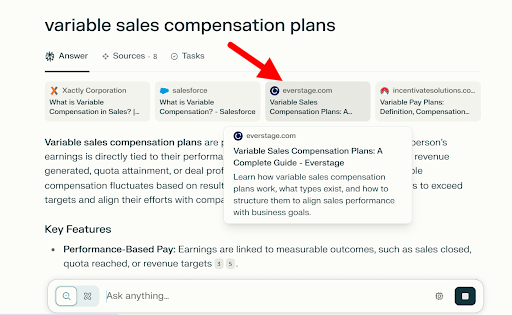
For instance, at Revv Growth, as part of our AEO and GEO services, we optimize content to improve visibility across AI search platforms like ChatGPT, Perplexity, and Google AI Overviews. Here's an example of one of our clients being cited in Perplexity.
Red flags to watch for:
- They talk about AEO and GEO but can't show a single measurement
- They can't explain how they'll improve or measure your visibility in AI-powered search.
5. AI-Enabled Marketing Capabilities
AI is transforming how SaaS marketing teams work by automating repetitive tasks, improving efficiency, and enabling faster execution. An agency that uses AI effectively can spend more time on strategy, optimization, and driving business outcomes instead of manual processes.
What to look for:
- Choose an agency that uses AI to enhance marketing workflows, such as campaign analysis, reporting, content research, PPC optimization, lead qualification, or marketing automation.
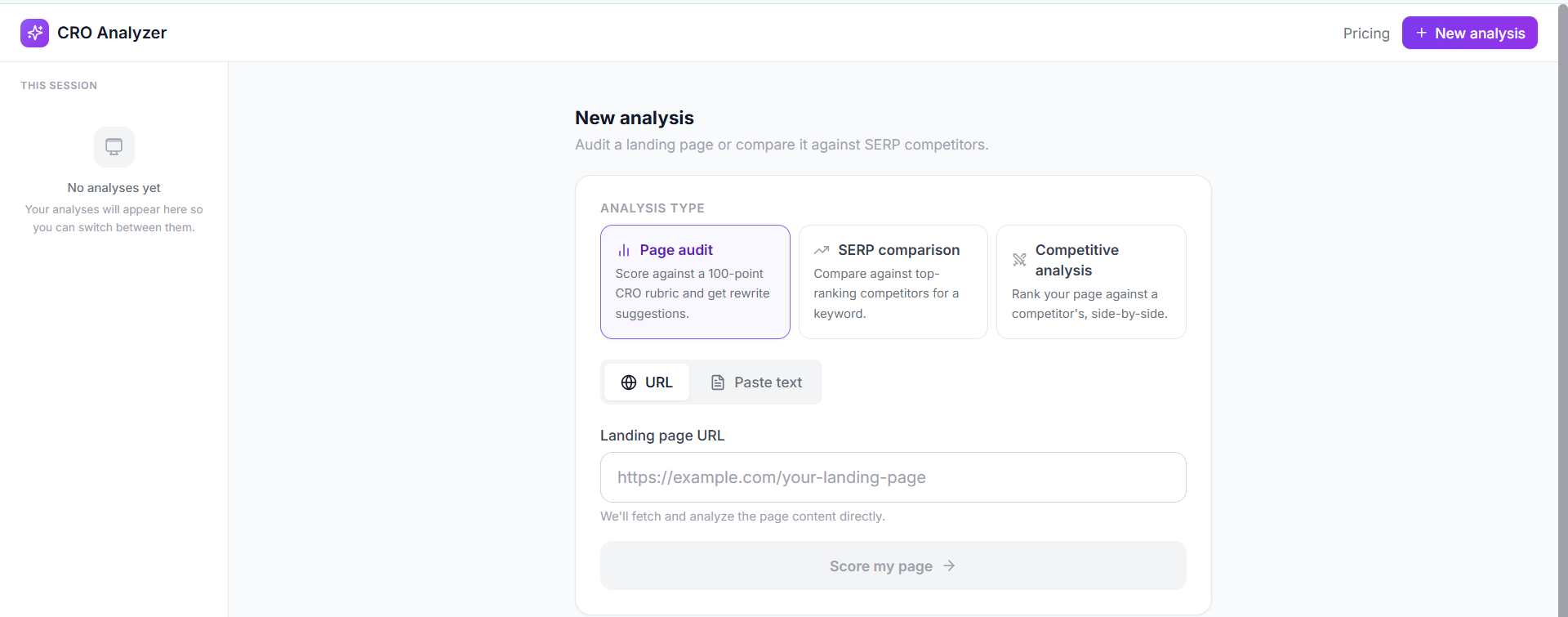
For example, at Revv Growth, we've built AI agents for tasks like AI citation tracking, PPC campaign management, automated reporting, cold email outreach, CRO analysis, and content generation, allowing our team to focus more on strategy and performance. Adoption varies widely across the market, and the differences show up clearly when you compare AI marketing agencies for SaaS.
Red flags to watch for:
- They use AI primarily to generate content without a clear quality or review process.
- They make limited use of AI, resulting in slower workflows and campaign delivery.
6. Team Expertise and Resources
The success of your marketing efforts depends on the people behind them. Even the best strategy can fall short if the team lacks the skills or experience to execute it effectively.
What to look for:
- Find out who will be working on your account and what their responsibilities will be. A strong SaaS marketing agency should have specialists across strategy, SEO, content, paid media, design, marketing automation, and analytics, with clear ownership and collaboration.
- Check whether the agency has specialists for different areas instead of relying on one person to handle everything.
Red flags to watch for:
- They can't clearly explain who will manage your account or deliver the work.
- Senior experts are involved only during the sales process.
7. Regular Reporting and Performance Measurement
Without clear reporting, it's difficult to know what's working, what's not, and whether your marketing investment is delivering results. Regular performance reviews help you make informed decisions and keep campaigns aligned with your business goals.
What to look for:
- Look for an agency that provides regular, transparent reports with metrics that matter, such as qualified leads, pipeline, conversions, and ROI.
- They should explain the insights behind the numbers and recommend clear next steps.
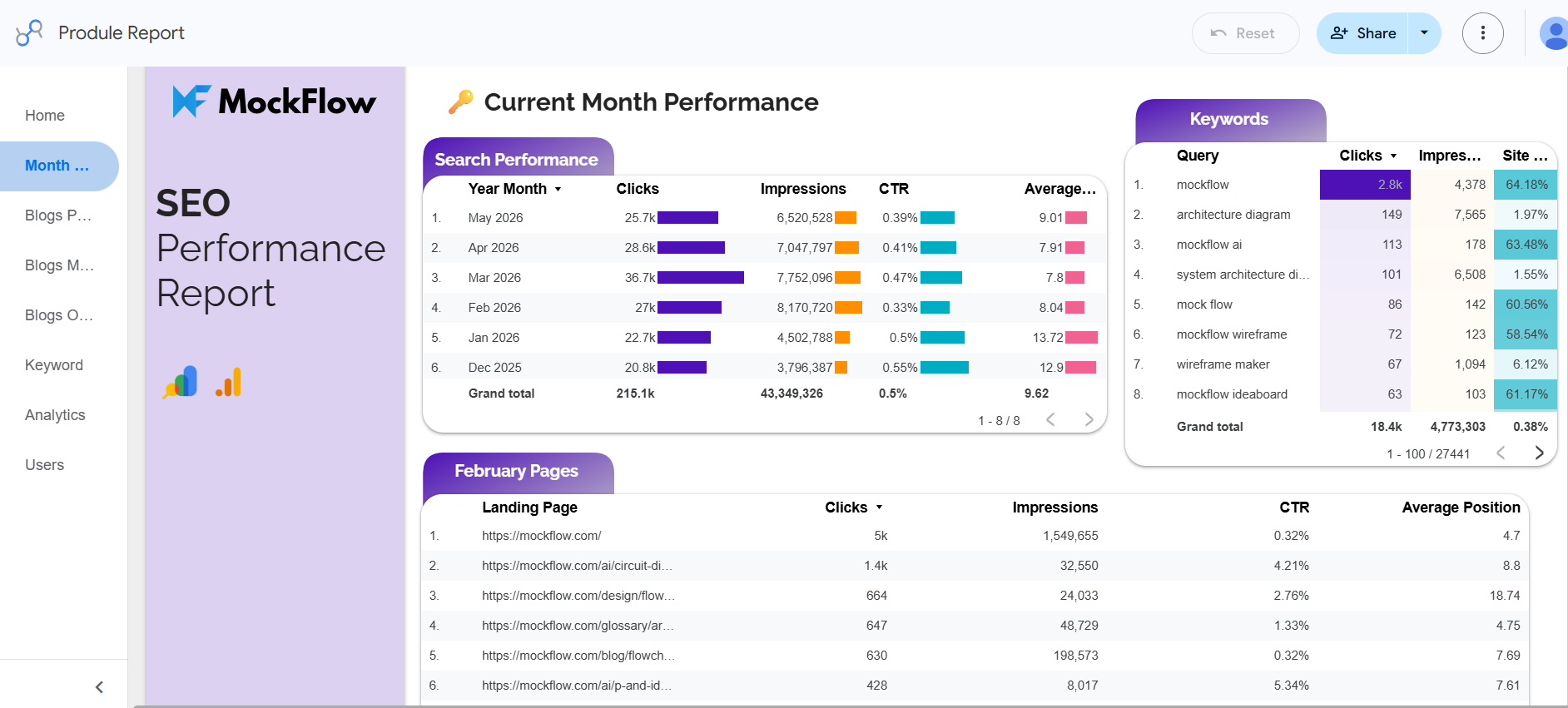
For examples, at Revv Growth, we've built MCP (Model Context Protocol) connectors that generate weekly client performance reports in minutes, replacing a manual process that previously took one to two days. Apart from this, we also send monthly reports to the clients to keep them updated.
Red flags to watch for:
- Reporting is infrequent or inconsistent, making it difficult to track progress.
- They share data but don't provide insights or recommendations for improvement.
8. Technical Stack Fluency
Modern SaaS marketing runs on a connected stack. Before you hire, check that the agency can work inside the tools you already use, since that is what makes accurate measurement and real automation possible.
What to look for:
- Choose an agency with experience using platforms such as HubSpot, Salesforce, GA4, Mixpanel, 6sense, and other SaaS marketing tools.
- They should be able to integrate these tools into their workflows and use the data to optimize campaigns and improve marketing performance.
Red flags to watch for:
- They have limited experience with the tools your business relies on.
- They recommend changing your existing tech stack without understanding your current setup.
9. Pricing and Engagement Model
The lowest-priced agency isn't always the best value, and the most expensive one isn't guaranteed to deliver better results. What matters is whether the pricing, scope of work, and engagement model align with your business goals and growth stage.
What to look for:
- Look for clear pricing, defined deliverables, realistic timelines, and transparent communication about what's included in the engagement.
- Choose an agency that offers an engagement model that fits your business, whether it's a monthly retainer, project-based work, or a hybrid approach.
Red flags to watch for:
- Pricing is unclear, or important deliverables aren't defined.
- Long-term contracts lock you in without flexibility or clear performance expectations.
10. Scalability and Long-Term Fit
Your marketing needs will change as your SaaS business grows. The right agency should be able to adapt its strategy, expand its capabilities, and continue delivering value at every stage of your growth journey.
What to look for:
- Choose an agency that can scale its services as your business grows, whether you're entering new markets, launching new products, or expanding your marketing efforts.
- Look for a long-term partner that proactively brings new ideas, adapts to industry changes, and aligns its strategy with your evolving business goals.
Red flags to watch for:
- They take a reactive approach instead of proactively recommending improvements and new opportunities.
- Their strategy doesn't evolve as your business or market changes.
By now, you should have a clear framework for evaluating potential agencies. But choosing the right partner is only half the equation. The way you work together has a direct impact on the results you achieve.
Best Practices for Working with a SaaS Marketing Agency
To get the best results, both sides need to work as partners. Clear communication, shared goals, and regular collaboration help campaigns move faster and ensure marketing efforts stay aligned with your business objectives.
1. Set Clear Goals and KPIs
Define what success looks like from the start. Whether your priority is increasing demo bookings, improving organic visibility, generating a qualified pipeline, or reducing customer acquisition costs, clear KPIs help both teams stay focused on the same outcomes.
2. Share Product and Customer Insights
Your potential agency can develop better campaigns when it understands your product, target audience, competitors, and customer pain points. Regularly sharing product updates, sales feedback, and customer insights helps refine messaging and improve campaign performance.
3. Maintain Regular Communication
Schedule recurring check-ins to review progress, discuss challenges, and adjust priorities. Consistent communication prevents misunderstandings and helps both teams respond quickly to new opportunities or changing business needs.
4. Trust the Strategy, but Review the Data
Give campaigns enough time to generate meaningful results, but review performance regularly. Focus on business metrics rather than vanity metrics, and use data to guide decisions instead of making changes based on short-term fluctuations.
Conclusion
SaaS marketing is changing faster than ever. AI-powered search, evolving buyer expectations, and increasingly connected marketing technologies are reshaping how companies attract and convert customers. Agencies that continuously adapt to these changes will be better positioned to deliver long-term results.
As you evaluate your options, focus on evidence rather than promises. The right agency won't just execute campaigns. It will understand your business, adapt to new opportunities, and help you build a sustainable growth engine for the future.
.svg)


.webp)
.avif)