


We track LLM visibility across our SaaS clients every week. There is a similar pattern we see with brands coming to us for the first time. They have strong Google rankings, solid content programs, but almost no presence when buyers ask ChatGPT, Perplexity, or Gemini to recommend tools for their specific use case.
Fixing that requires a different kind of work than traditional SEO. The signals are different, the measurement is different, and the agencies claiming to do it well all sound remarkably similar on their service pages.
We compared seven agencies on what actually matters for SaaS: buyer-prompt coverage, citation strategy, multi-LLM consistency, measurement depth, and understanding of SaaS buying cycles. Here's what separated them.
Best LLM SEO agencies for SaaS at a glance
Here’s the list of the top 7 LLM SEO agencies for saas, simplified.
A common question among SaaS founders is whether strong Google visibility still matters if their product rarely appears in AI-generated recommendations
But before comparing agencies, first check whether your brand has a real LLM visibility gap.
- Check visibility beyond branded prompts: Start by splitting your prompt set in two. First, the brand-aware prompts and second, neutral problem or use-case prompts. If visibility drops on neutral prompts, the issue is broader discoverability.
- Check where competitors earn authority: Review the sources LLMs cite for priority prompts. If competitors keep appearing through comparison pages, communities, review platforms, or industry publications, look for an agency that can build relevant third-party authority alongside owned-content optimization.
These two checks give you a clearer baseline for deciding which agency capabilities actually matter so you pick the right one.
The best LLM SEO agencies for SaaS in 2026
The agencies below were selected for their established work across LLM visibility, citations, buyer prompts, content retrieval, and measurement for SaaS and B2B companies.
This matters because AI chatbots are becoming part of software evaluation itself. G2's 2026 AI Search Insight Report found that 71% of B2B software buyers use AI chatbots during software research, while 51% now start their research with an AI chatbot more often than Google. We compared each agency by its strongest SaaS use case, LLM visibility approach, and measurement focus.
1. RevvGrowth: Best for SaaS brands turning LLM visibility into qualified demand
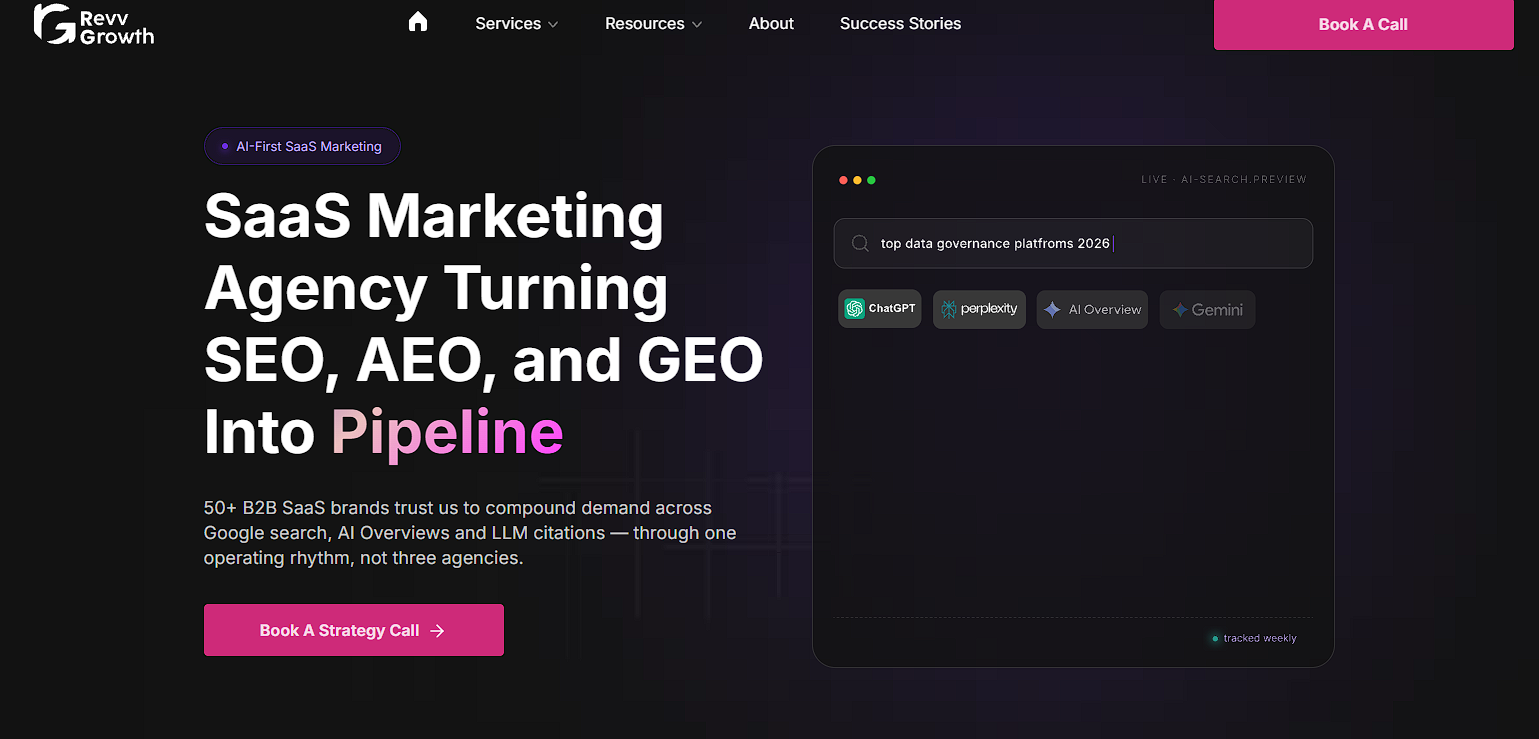
RevvGrowth is an LLM SEO agency for B2B SaaS companies that want their products to become recurring recommendations across ChatGPT, Perplexity, Gemini, Claude, and other LLM-driven discovery journeys.
The focus is on building enough relevance and authority around the brand that it can appear across the category, comparison, alternative, and use-case questions buyers ask while researching software.
LLM visibility and citation coverage across buyer prompts
LLM visibility can vary across category, comparison, alternative, and use-case prompts. Our answer engine optimization approach is built around increasing that coverage. We strengthen the pages and external signals LLMs can retrieve when buyers ask about a category, compare vendors, evaluate alternatives, or look for a product for a specific use case.
For SaaS teams, that creates three practical advantages:
- Wider recommendation coverage: The brand has a stronger chance of appearing across a cluster of related buyer questions rather than depending on one favorable prompt.
- More sources reinforcing the brand: Product claims and category associations are supported by owned content alongside relevant third-party sources that LLMs can use as corroboration.
- Stronger mention and citation presence: We look beyond whether a URL was cited and track whether the brand itself becomes part of the answer.
That distinction matters. AirOps found that brands earning both a citation and a brand mention were 40% more likely to reappear across repeated LLM responses than brands receiving citations alone.
LLM visibility that contributes to qualified demand
Citation growth matters when it helps put the product in front of buyers during real purchase research. We therefore track visibility across commercially relevant prompts and follow the resulting LLM referral activity into high-intent actions and leads.
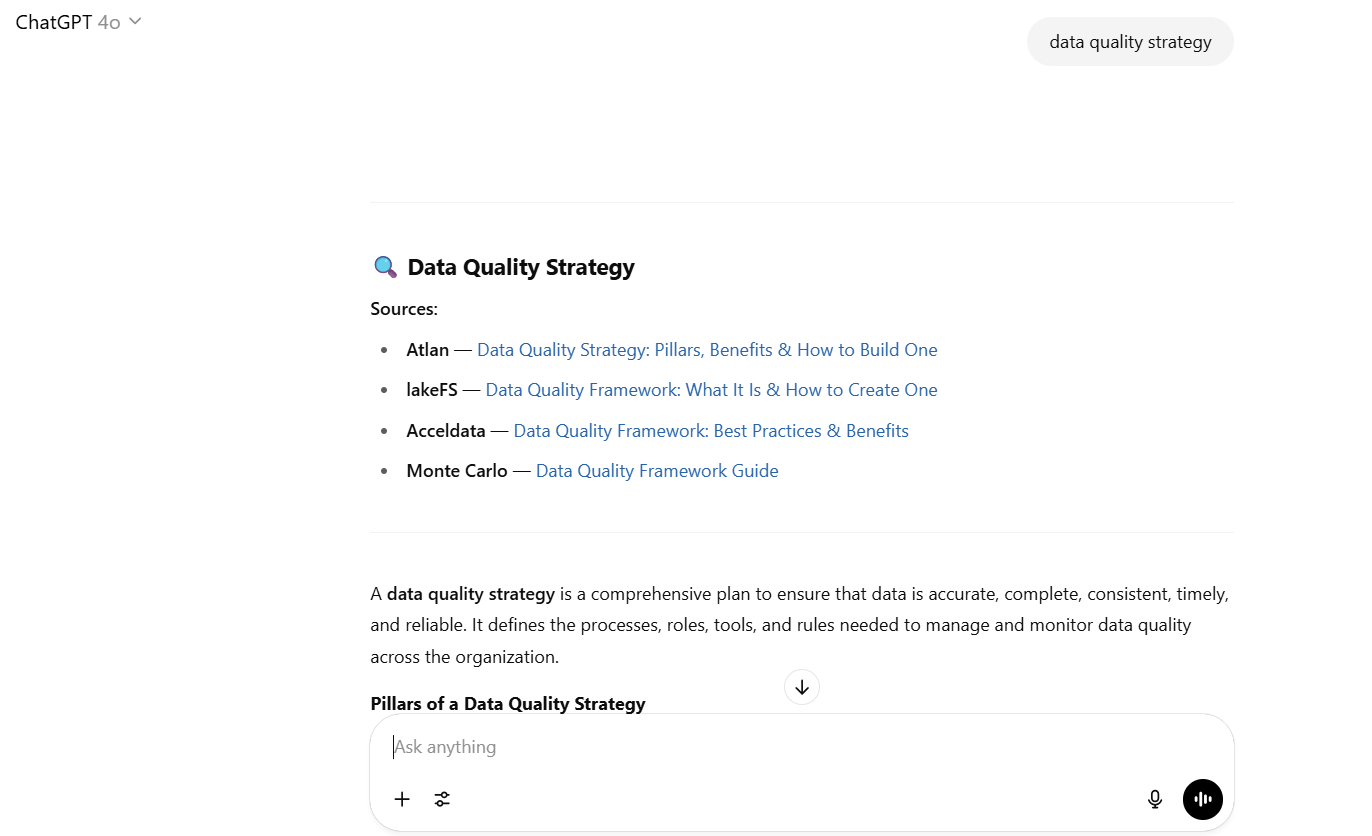
We used this same process for Atlan. Starting from no measurable presence across AI-answer platforms, Atlan went on to appear across 7,600+ AI-generated prompts, accumulate 6,500+ domain citations, and record a 25% lift in MQLs attributed to AI-search visibility.
Why RevvGrowth is the strongest fit for SaaS LLM visibility
RevvGrowth is best suited to B2B SaaS teams that want LLM visibility connected to measurable demand.
It is a strong fit when you need:
- Visibility across category, comparison, alternative, and use-case prompts
- Owned content and third-party citation signals working together
- Multi-LLM tracking connected to referral traffic, leads, and pipeline
For SaaS brands building LLM search into a repeatable acquisition channel, our generative engine optimization approach brings citation authority, recommendation presence, multi-LLM monitoring, and commercial measurement into one focused program.
2. DerivateX: Best for mid-market SaaS teams prioritizing LLM citation measurement
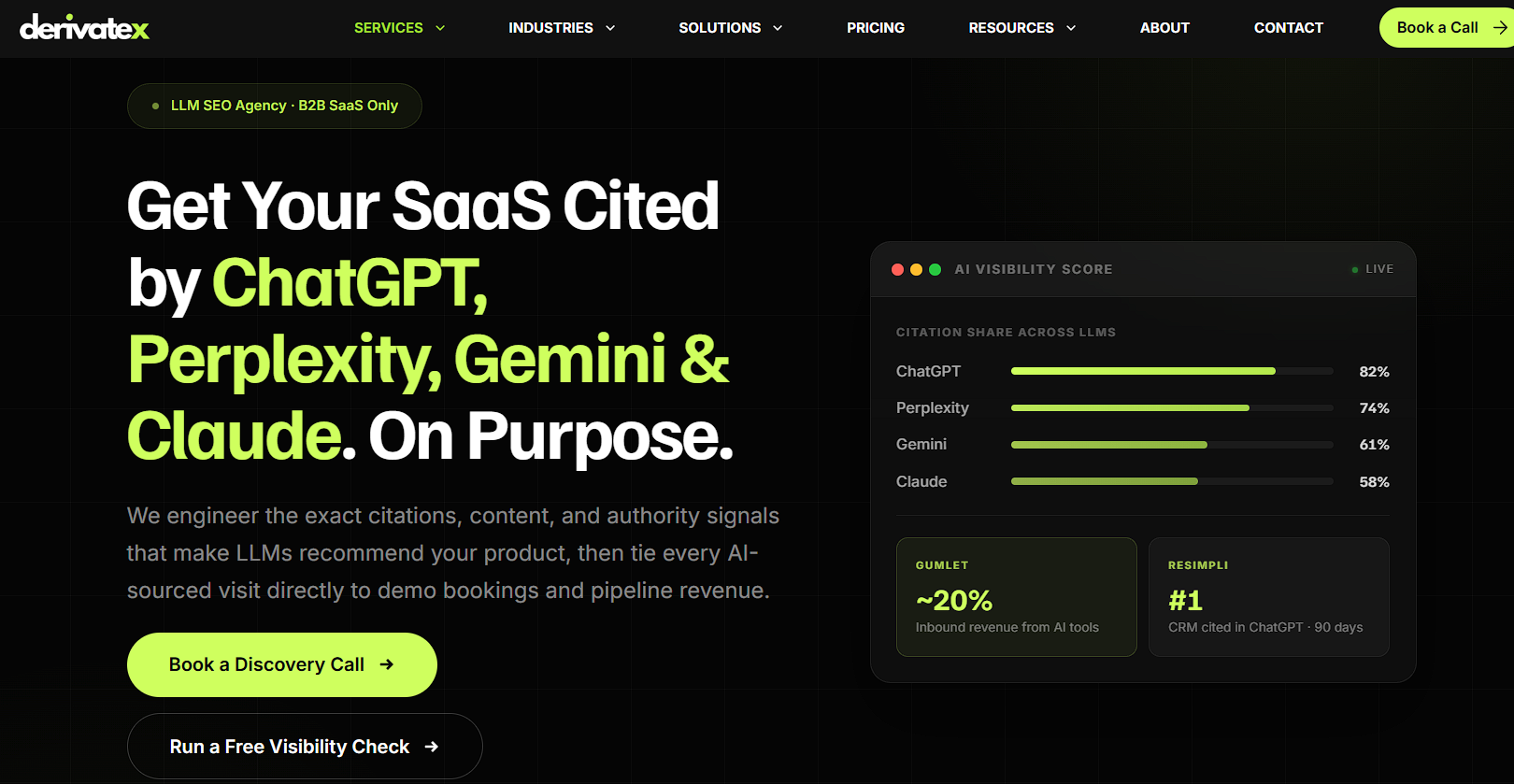
DerivateX is a B2B SaaS-focused agency that approaches LLM SEO through structured citation measurement.
Its Citation Engineering model and AI Visibility Score make it most relevant to teams that want a clearer view of where their brand appears across buyer prompts and how that visibility changes over time.
LLM citation visibility across buyer prompts
DerivateX tracks whether a SaaS brand appears consistently when prospects research categories, compare vendors, and evaluate solutions.
Its measurement covers:
- Citation frequency across defined buyer prompts
- Visibility relative to competing SaaS brands
- Sources influencing LLM responses
- Prominence across multiple AI platforms
This gives marketing teams a repeatable way to identify citation gaps instead of checking individual prompts manually.
Citation measurement connected to SaaS outcomes
DerivateX can extend that visibility data into CRM reporting, helping teams see whether AI-driven discovery contributes to demos and pipeline.
The stronger differentiator, however, is the structured measurement layer: teams can monitor which prompts are improving, where competitors remain more visible, and which citation sources may require attention.
Best-fit mid-market SaaS use case
DerivateX is best suited to mid-market B2B SaaS companies that want prompt-level citation scoring and structured LLM visibility reporting as the center of the engagement.
3. Breaking B2B: Best for SaaS teams competing on high-intent buyer prompts
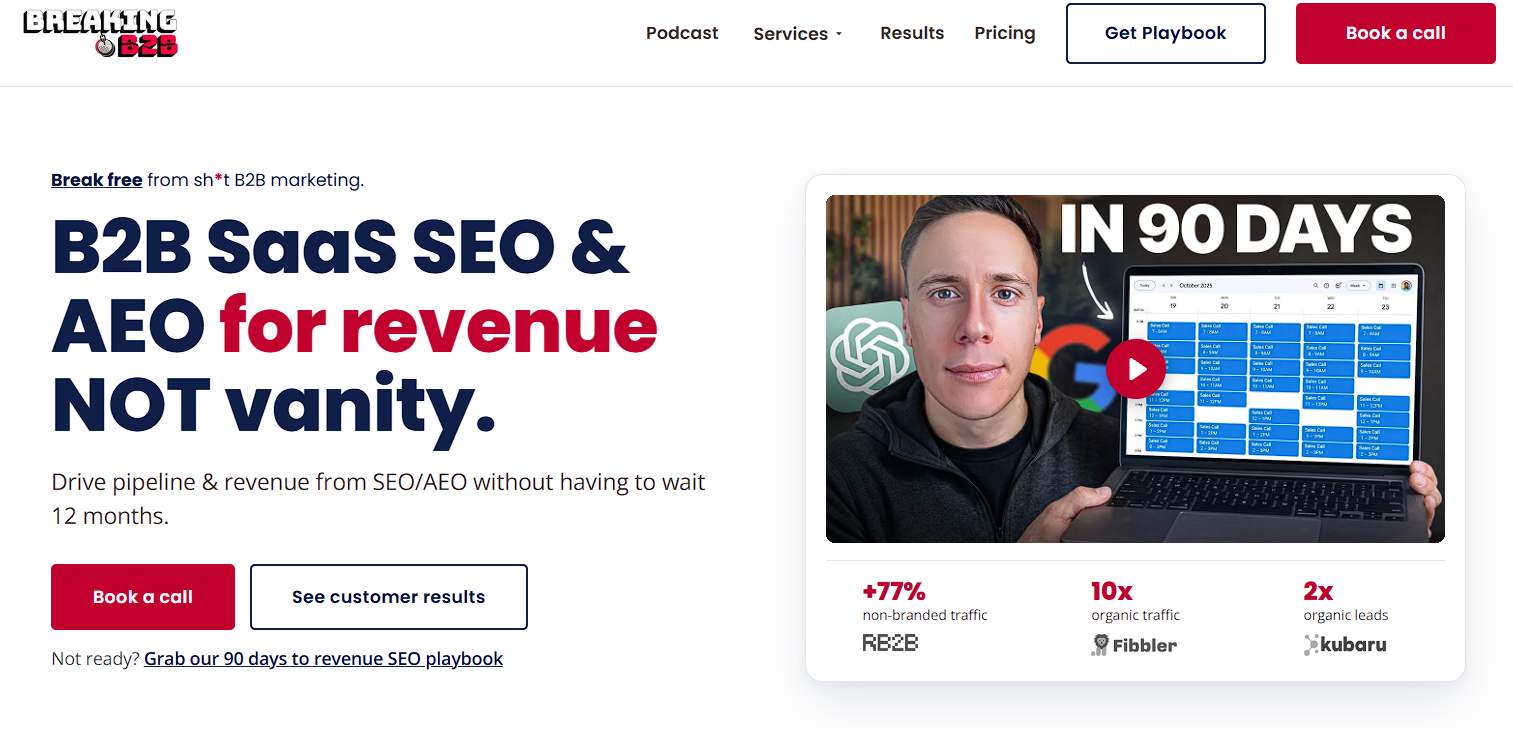
Breaking B2B is a B2B-focused LLM SEO agency centered on commercial search intent.
Its approach combines buyer-prompt research, bottom-of-funnel content, answer-format analysis, and brand visibility work, making it relevant when SaaS buyers rely heavily on comparisons and recommendations while creating a shortlist.
Visibility across high-intent SaaS prompts
Breaking B2B concentrates on questions closer to a purchase decision, including:
- Best software for a specific use case
- Product alternatives and competitor comparisons
- Vendor recommendations
- Feature, integration, and workflow questions
The agency studies how LLMs answer these prompts and develops content around the information buyers need during evaluation.
Stronger presence during vendor selection
Its work combines on-site content with external mentions and authority signals intended to improve how often a brand appears during product research.
Mentions and citations can also be evaluated alongside demos and qualified pipeline, giving SaaS teams a commercial view of LLM visibility.
Best-fit SaaS use case
Breaking B2B is best suited to B2B SaaS companies in categories where comparison, alternative, and vendor-selection prompts strongly influence purchase decisions.
4. iPullRank: Best for enterprise SaaS with complex retrieval challenges
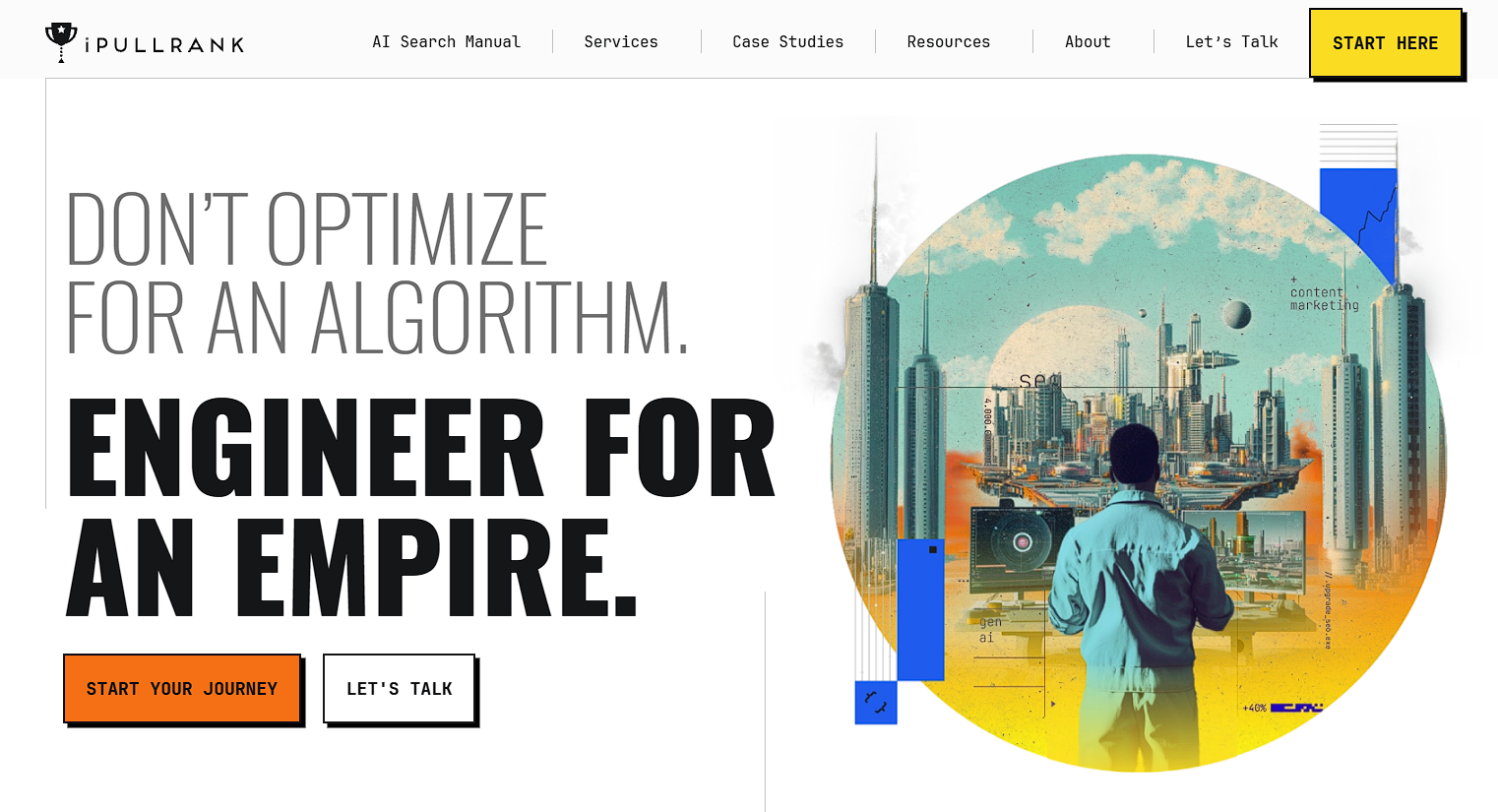
iPullRank is an enterprise search agency built around Relevance Engineering, combining information retrieval, technical SEO, content strategy, and AI-search measurement.
For large SaaS companies, the core challenge is often making the right information retrievable across complex product pages, documentation, integrations, and content libraries.
LLM retrieval and content relevance
iPullRank focuses on the technical and structural factors that influence which information an LLM can surface.
Its work can include:
- Passage relevance: Making useful sections easier to retrieve for specific questions.
- Entity relationships: Clarifying connections between products, features, use cases, and topics.
- Information architecture: Organizing large content libraries so important pages are easier to interpret.
- Technical accessibility: Addressing barriers that limit discovery or retrieval.
This is particularly useful for SaaS companies with large documentation hubs, multiple products, or extensive solution pages.
More accurate visibility across complex product journeys
The goal is to improve which information is retrieved for specific buyer questions, especially when different products, features, or integrations could otherwise be confused.
That makes iPullRank relevant for enterprise SaaS brands where accurate retrieval matters as much as visibility itself.
Best-fit enterprise SaaS use case
iPullRank is best suited to enterprise SaaS companies where site complexity, retrieval, and information architecture are limiting LLM visibility.
5. Omniscient Digital: Best for established SaaS brands building editorial authority
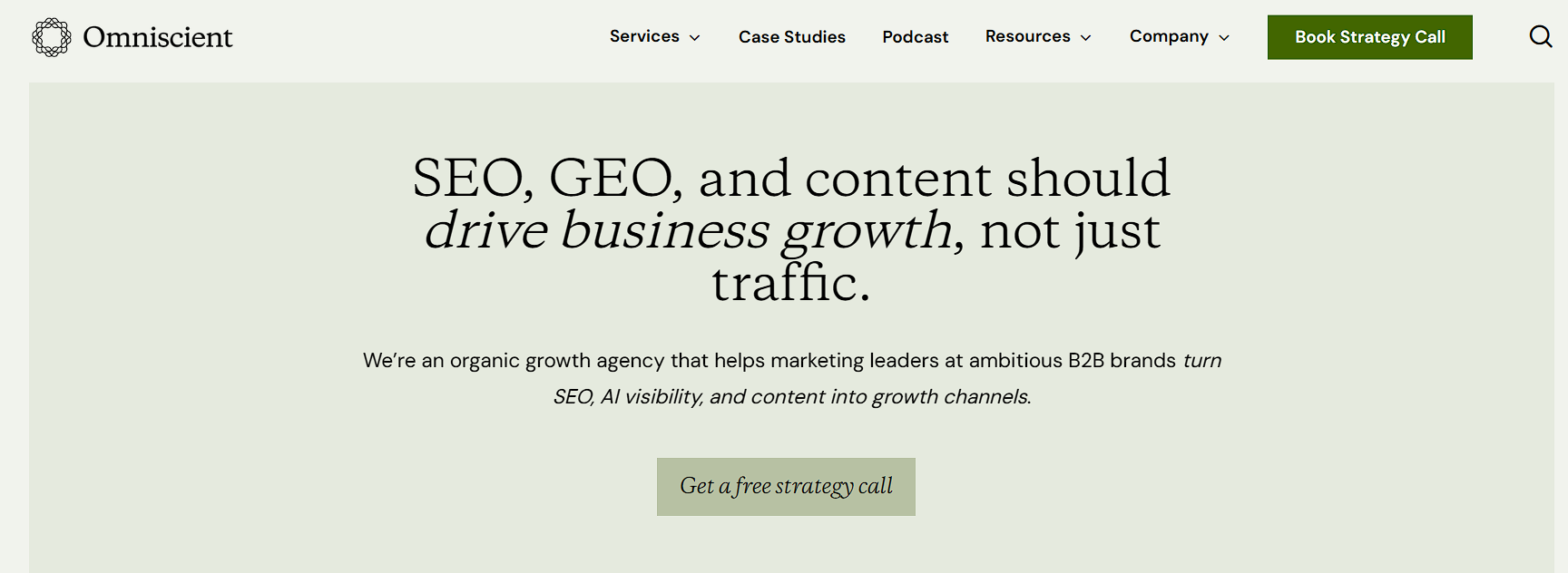
Omniscient Digital is an organic growth agency focused on B2B software and SaaS. Its LLM visibility work builds on a content-led model that combines GEO, expert content, SEO, and digital PR.
For SaaS companies with established content programs, the value lies in extending that editorial authority into the topics and sources that influence LLM recommendations.
Stronger authority across SaaS buying topics
Omniscient Digital builds depth around the subjects a SaaS brand wants to be associated with.
That can include:
- Category education and problem-led content
- Product use cases and commercial topics
- Alternatives and comparison content
- Expert perspectives and third-party mentions
The value is consistency. LLMs have more relevant material to retrieve when buyers ask about the category, available solutions, or specific use cases.
Editorial programs that support recurring LLM visibility
Rather than treating LLM optimization as a separate content stream, Omniscient Digital incorporates it into broader editorial programs.
For established SaaS teams, this can help strengthen visibility across a wider set of buyer questions while continuing to build category authority over time.
Best-fit established SaaS use case
Omniscient Digital is best suited to mature B2B SaaS companies with an established content engine that want GEO and LLM visibility integrated into a broader organic-growth program.
6. Skale: Best for SaaS brands missing from LLM product recommendations
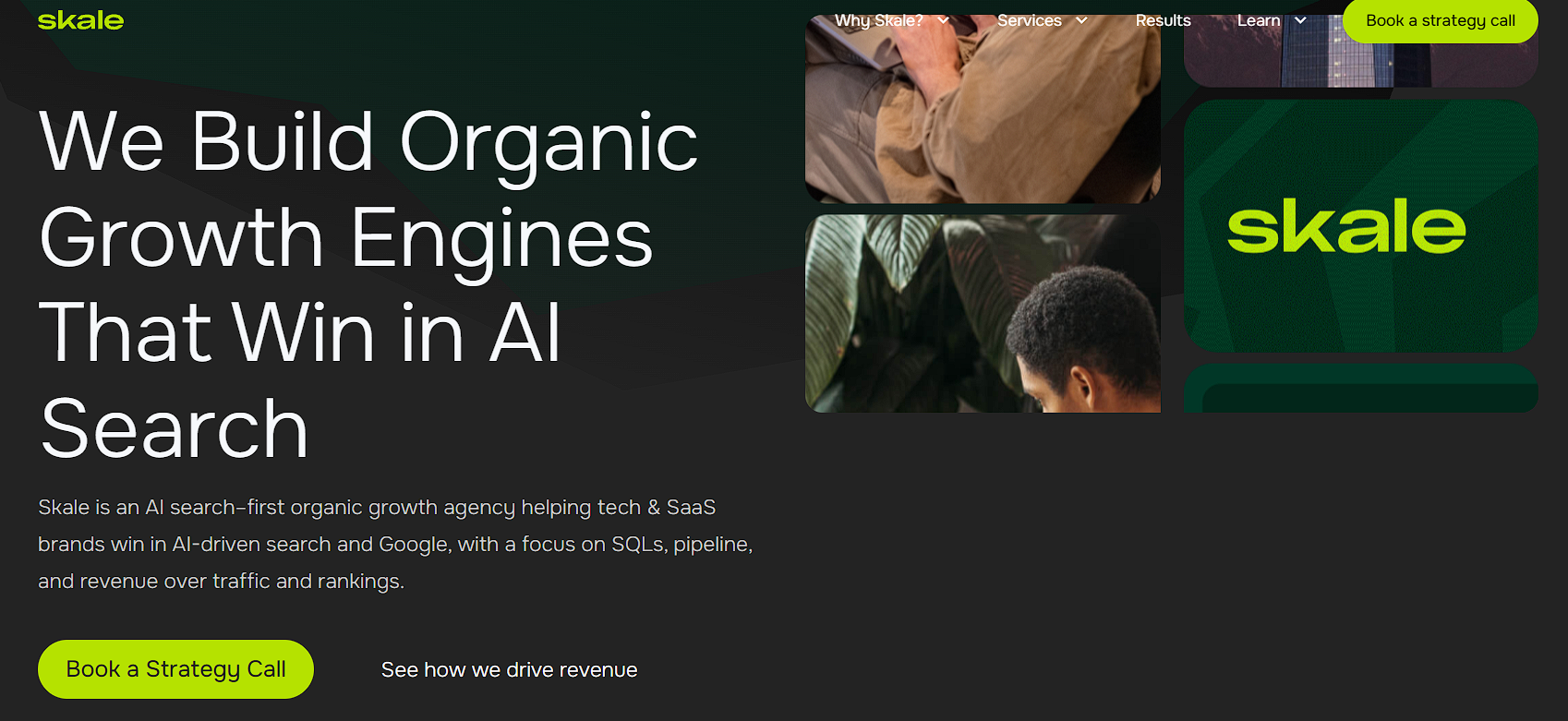
Skale is a SaaS-focused organic growth agency that has extended its work into LLM visibility through AI Brand Mentions.
The focus suits SaaS companies with established content that still appear inconsistently when buyers ask LLMs for product recommendations, alternatives, or category comparisons.
Greater visibility in LLM product shortlists
Skale focuses on the external sources that influence which brands appear in AI-generated recommendations.
Its work can include:
- Identifying pages and domains LLMs already reference for important SaaS prompts
- Finding competitor mentions where the client's brand is absent
- Securing relevant brand inclusion across third-party content
- Monitoring changes in recommendation and citation presence
This is useful when strong owned content alone has not translated into consistent LLM visibility.
Stronger third-party signals around the SaaS brand
For recommendation-led prompts, what other sources say about a product can shape how confidently an LLM associates it with a category or use case.
Skale's model strengthens those external brand signals while connecting them with its wider SaaS organic growth work.
Best-fit SaaS use case
Skale is best suited to SaaS companies that already have a solid content foundation but need stronger third-party presence across the sources influencing LLM recommendations.
7. Discovered Labs: Best for growth-stage SaaS teams building LLM-first content visibility
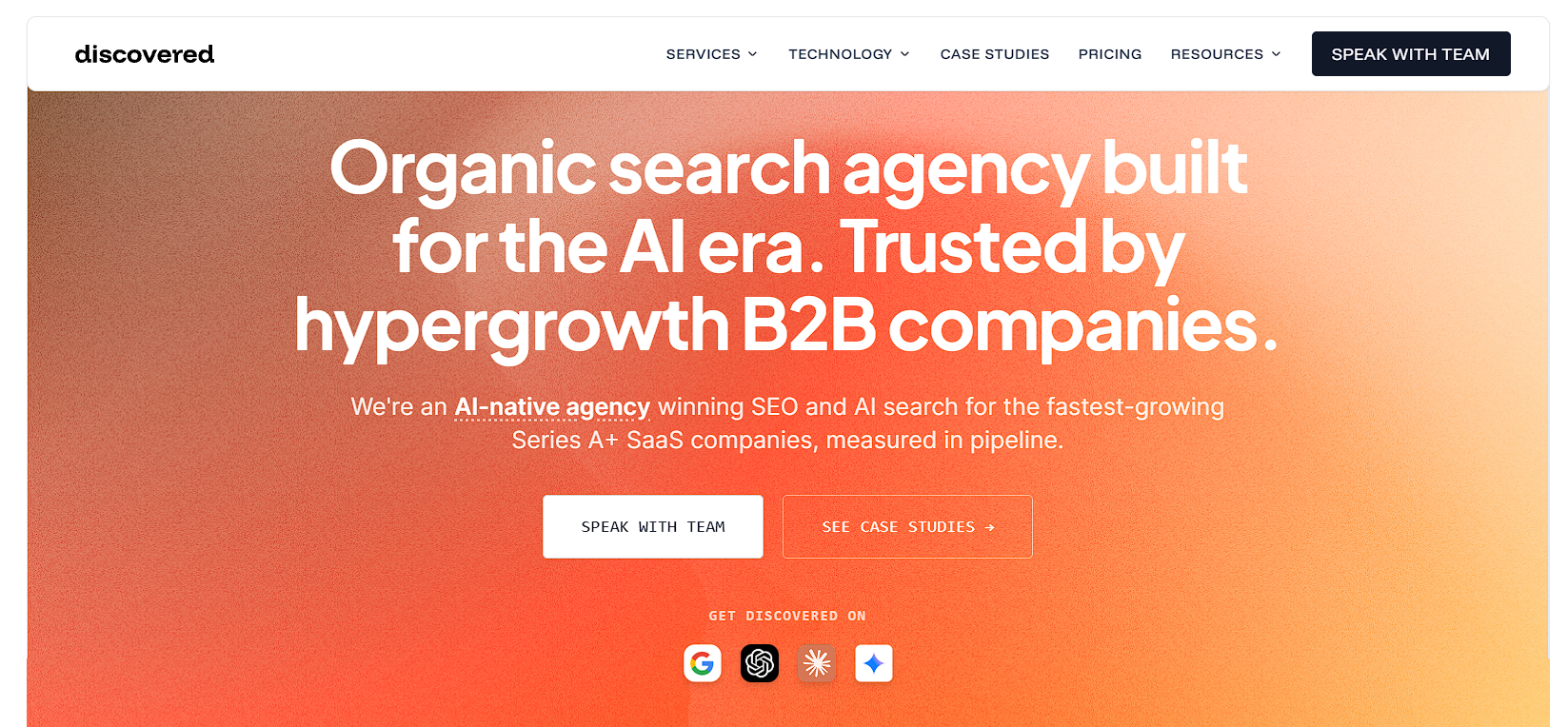
Discovered Labs is an AI-native agency that works across LLM SEO, content, and external authority building.
Its CITABLE framework focuses on making information easier for LLMs to retrieve, understand, and reference. The framework gives growth-stage SaaS teams a structured way to build content specifically for LLM retrieval and citation.
More citable content across buyer questions
Discovered Labs structures content around the way LLMs retrieve and synthesize information.
Its approach emphasizes:
- Clear answers to specific buyer questions
- Strong connections between the brand, category, and use cases
- Content formats that make useful passages easier to retrieve
- Supporting authority signals beyond the company's own website
For SaaS teams, this can help strengthen visibility across educational, comparison, and recommendation prompts.
Broader validation beyond owned content
Discovered Labs also incorporates community and third-party signals into its LLM visibility work.
That gives SaaS brands additional references that can reinforce their positioning when LLMs evaluate products, categories, and recommendations across multiple sources.
Best-fit growth-stage SaaS use case
Discovered Labs is best suited to growth-stage B2B SaaS companies that want an LLM-first content and authority program without needing a large enterprise search engagement.
Ready to make your SaaS brand more visible in LLM search?
LLM SEO helps SaaS companies improve how they appear when buyers use ChatGPT, Perplexity, Gemini, Claude, and other LLMs to research categories, compare products, and build vendor shortlists. If you are looking for broader support across search and AI discovery, our AI SEO agencies for SaaS comparison cover that wider use case.
RevvGrowth focuses specifically on building stronger LLM visibility through buyer-prompt coverage, citation authority, and multi-LLM measurement tied to qualified demand. If your brand is still missing from the answers buyers rely on, the next step is finding where those visibility gaps exist and which prompts and sources need attention first.
.svg)


.webp)
.avif)